
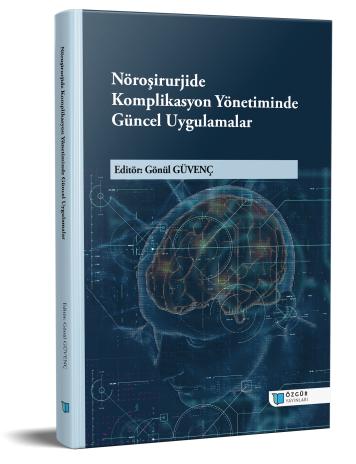
Management of Complications and Nursing Care for Patients with Subarachnoid Hemorrhage
Chapter from the book:
Güvenç,
G.
(ed.)
2025.
Current Practices in The Management of Complication in Neurosurgery.
Synopsis
Subarachnoid Hemorrhage (SAH) is a neurological emergency characterized by bleeding into the subarachnoid space surrounding the brain and spinal cord, resulting in high morbidity and mortality rates. SAH accounts for approximately 5% of all stroke cases, with an annual incidence ranging between 7.2 and 10.5 cases per 100,000 people. The most common cause of SAH is the rupture of aneurysmal dilatations in the intracranial vessels. SAH presents as an emergency with sudden-onset headache. Cerebral angiography is the gold standard for SAH diagnosis. In recent years, the treatment approach has involved open surgery and endovascular treatments. The goal of surgical treatment after SAH is to eliminate the cause of SAH and remove blood from the subarachnoid space. Systemic and neurological complications may arise during clinical follow-up after a SAH. The main complications include rebleeding, increased intracranial pressure, hydrocephalus, cerebral vasospasm and delayed cerebral ischemia (DCI), epileptic seizures, secondary complications related to the cardiovascular and pulmonary systems, neuroendocrine response disorders, metabolic irregularities, and various electrolyte imbalances. Patients with SAH should be cared for in a specialized neurointensive care unit by a multidisciplinary team. Considering the intensive care requirements and long-term disability of patients with SAH, coordinated and expert nursing care is essential to achieve the best clinical outcomes. This section addresses the complications observed in patients with SAH in light of the current literature. Evidence-based practices related to complication management, clinical follow-up, and nursing care are presented in detail in this review.
How to cite this book
License

This work is licensed under a Creative Commons Attribution-NonCommercial 4.0 International License.
Published
DOI
Categories
Copyright (c) 2025 Gönül Güvenç; Canan Gürsoy- Gülay Öztürk- Mehtap Çullu- Güven Gürsoy- Ozan Aydoğdu- Melih Furkan Durak- Mustafa Türkmen- Ufuk Bozkurt- Gülşah Köse- Metehan Küçükkurt- Gönül Güvenç- Beste Dalbatan- Niyazi Taşkıran- Mertcan Güler- Eda Ceylan