
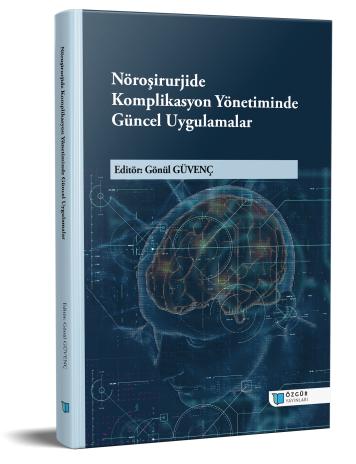
Current Approaches to Local Antibiotic Applications for Surgical Site Infections in Neurosurgery
Chapter from the book:
Güvenç,
G.
(ed.)
2025.
Current Practices in The Management of Complication in Neurosurgery.
Synopsis
Surgical site infections (SSIs) remain a major cause of morbidity, mortality, and increased healthcare costs in neurosurgery. Infection rates generally range from 1–3% in cranial procedures and from 2–10% in spinal instrumentation surgeries, with higher rates reported in complex revision and tumor cases. In instrumented procedures, the limited penetration of systemic antibiotics into poorly perfused tissues and biofilm-covered implant surfaces significantly restricts prophylactic efficacy. Local antibiotic delivery systems have therefore gained substantial interest as an adjunct to systemic prophylaxis. These systems achieve very high drug concentrations at the surgical site while minimizing systemic exposure. Common strategies include intra-wound vancomycin powder, gentamicin-impregnated collagen sponges, biodegradable calcium sulfate beads, antibiotic-loaded polymethylmethacrylate (PMMA) bone cement, and antibiotic-impregnated shunt and catheter systems. Recent meta-analyses and large cohort studies have shown that intra-wound vancomycin powder significantly reduces SSI rates in spinal surgery, without increasing systemic toxicity, and that antibiotic-impregnated shunts markedly decrease shunt infection rates compared with standard or silver-impregnated catheters. However, important questions remain regarding the optimal drug selection, dosage, carrier material, impact on bone fusion, and the risk of promoting antimicrobial resistance.
How to cite this book
License

This work is licensed under a Creative Commons Attribution-NonCommercial 4.0 International License.
Published
DOI
Categories
Copyright (c) 2025 Gönül Güvenç; Canan Gürsoy- Gülay Öztürk- Mehtap Çullu- Güven Gürsoy- Ozan Aydoğdu- Melih Furkan Durak- Mustafa Türkmen- Ufuk Bozkurt- Gülşah Köse- Metehan Küçükkurt- Gönül Güvenç- Beste Dalbatan- Niyazi Taşkıran- Mertcan Güler- Eda Ceylan