
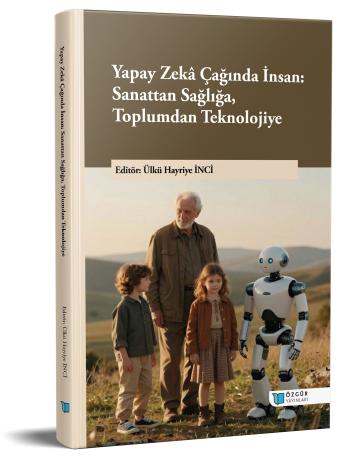
Occupational Health in the Digital Age: Safe Work Environments Supported by Artificial Intelligence
Chapter from the book:
İnci,
Ü.
H.
(ed.)
2025.
Humans in the Age of Artificial Intelligence: From Art to Health, Society to Technology.
Synopsis
The rapid spread of digitalization in the workplace signals a comprehensive transformation that necessitates a reexamination of methods used in occupational health and safety. It is widely known that occupational accidents today occur primarily as a result of the interaction between human errors, machinery and equipment malfunctions, unexpected changes in environmental conditions, and deficiencies in organizational processes. This multifaceted nature renders traditional risk assessment models inadequate in predicting the volatile and dynamic risk environment. In this context, technologies based on artificial intelligence, big data analytics, image processing algorithms, and the Internet of Things are playing an increasingly critical role in safety management by offering more holistic and proactive solutions for preventing occupational accidents.
Predictive AI systems can identify the likelihood of potential hazards by jointly evaluating datasets from past accidents, sensor-based measurements, operational parameters in production processes, and employee behavioral patterns. This approach increases the effectiveness of early warning mechanisms, particularly in high-risk sectors, and enables the timely implementation of protective measures. Similarly, image processing-based security solutions offer high accuracy in areas such as monitoring personal protective equipment use, monitoring entry into hazardous areas, and automatically classifying risky behaviors. Wearable sensors, on the other hand, monitor employee physiological states, ergonomic load levels, and environmental risk indicators in real time, contributing to the early detection of factors that can lead to accidents, such as fatigue, decreased alertness, or heat stress. However, it's important to remember that data privacy, ethical monitoring limitations, algorithmic bias, and cost must be carefully considered. The sustainable success of AI-enabled security applications requires a transparent and ethical approach that prioritizes employee rights beyond technical benefits.
How to cite this book
License

This work is licensed under a Creative Commons Attribution-NonCommercial 4.0 International License.
Published
DOI
Categories
Copyright (c) 2025 Ülkü Hayriye İnci; Hasan Kınacı- Emineana Ahmetoğlu- Zeliha Seçkin- Onur Doğan- Mehmet Can Demir- Vildan Doğanay