
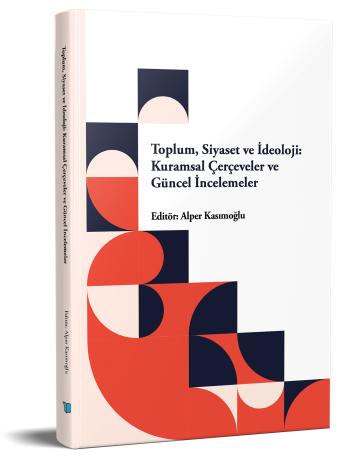
Constructing Masculinity and Political Power in the Early Turkish Republic: The ‘New Man’ Model in the Context of Women’s Emancipation Debates
Chapter from the book:
Kasımoğlu,
A.
(ed.)
2025.
Society, Politics and Ideology: Theoretical Frameworks and Contemporary Analyses.
Synopsis
This study argues that policies aimed at women’s emancipation in the early Republican era of Turkey cannot be analyzed independently from the political and social construction of masculinity. The dominant gender literature on early Republican Turkey has largely focused on women’s rights and debates on “state feminism,” while treating masculinity as an implicit and unquestioned category. This study seeks to complement such approaches by foregrounding masculinity as a central component of the Republican gender regime. By examining historical continuities and ruptures from the late Ottoman period to the Republic, the study analyzes how a “new masculinity” was institutionalized through the National Struggle, Republican reforms, family law, the reorganization of the public sphere, and state ideological apparatuses. Drawing on the concepts of hegemonic masculinity and state masculinity, the study demonstrates how women’s emancipation discourse simultaneously contributed to the consolidation of a male-dominated political order. The study concludes that early Republican modernization should be understood as a gendered power configuration in which femininity and masculinity were co-constructed through interdependent political processes.
How to cite this book
License

This work is licensed under a Creative Commons Attribution-NonCommercial 4.0 International License.
Published
DOI
Categories
Copyright (c) 2025 Alper Kasımoğlu; Ali Kiriktaş- Gamze Erdoğan- İlyas Erdoğan- Erhan Örselli- Zekeriya Bilici- Emre Feyzi Çolakoğlu- Sinem Yüksel Çendek- Alper Kasımoğlu