
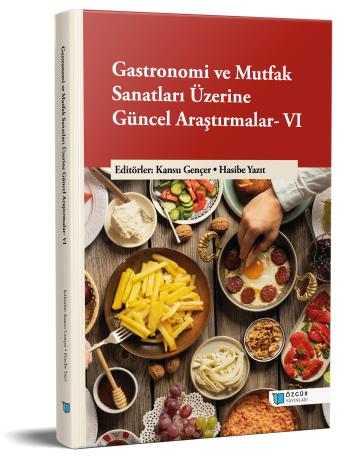
The Story of a Bread: “The Bridal Bread Ritual” of Bulgaristan Immigrants
Chapter from the book:
Gençer,
K.
&
Yazıt,
H.
(eds.)
2025.
Current Research on Gastronomy and Culinary Arts-VI.
Synopsis
For migrants, food is considered a functional element in preserving cultural identity and adapting to the social and cultural environment of the destination region. It can also be said that communities committed to their traditions can effectively preserve their cultural values and habits in the regions they migrate to (Mutlubaş, 2025; 788-789). This study focuses on the wedding bread of Bulgarian immigrants (macır) living in the village of Geyikdere in Yalova province. The aim of this research is to document the oral culture and memory surrounding the intergenerational transmission of bridal bread, its purpose, preparation method, and timing, as well as the collective work tradition surrounding it, and to visually record the tradition of bridal bread. The research design, conducted using qualitative methods, is cultural analysis (ethnography). Data were collected using a semi-structured interview technique in line with the purpose of the research. The data obtained revealed that bridal bread is a type of bread that has been passed down from pre-migration settlements to post-migration settlements. Additionally, detailed information on the traditional bread recipe, preparation techniques, baking times, and the collaborative tradition surrounding bread were also recorded. The research data is important for documenting intangible folk culture in written and visual form.
How to cite this book
License

This work is licensed under a Creative Commons Attribution-NonCommercial 4.0 International License.
Published
DOI
Categories
Copyright (c) 2025 Kansu Gençer- Hasibe Yazıt; Serap Nazır- Uğur Can Aykanat- Merve Karakurluk- Yasemin Ersoy- Mehmet Polat- Okan Oğuz- Mehmet Özdamar- İbrahim Canbey- Ömür Alyakut- Simon Abou Fayad- Davut Uysal- Viana Hassan- Marie-Charbel Raymond Badran- Gülsüm Yurtseven- İrem Çafa- Yılmaz Seçim- Ayşe Büşra Madenci