
Children In The Grip of Migration: Child Trafficking, Child Migration, And Child Rights
Chapter from the book:
Arslan,
E.
&
Deniş,
H.
E.
&
Çiçek,
A.
(eds.)
2025.
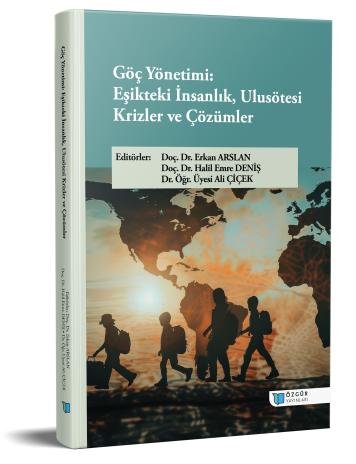
Migration Management: Humanity at the Threshold, Transnational Crises, and Solutions.
Synopsis
This study examines child trafficking, child migration, and child rights within the context of cross-border migration and crime processes intensified by globalization. Human trafficking is defined as a serious human rights violation enshrined in international law, with the concept of consent deemed legally irrelevant for individuals under 18, thereby clearly defining “child trafficking.” The article highlights the complex relationship between child migration and trafficking, emphasizing that children’s vulnerabilities during migration journeys render them susceptible to exploitation. Child trafficking manifests in various forms, including sexual exploitation, forced labor, child marriage, illegal adoption, organ trafficking, and begging, with factors such as age, gender, disability, and socio-economic conditions determining the risk of victimization. Adolescent girls are particularly vulnerable due to gender inequality and poverty. Risk factors such as lack of education, absence of caregivers, widespread legal identity gaps, and armed conflicts further exacerbate children’s susceptibility to trafficking. Victims of child trafficking suffer severe physical, psychological, and psychosocial harm, resulting in multidimensional consequences including trauma, health issues, educational disruption, social exclusion, and long-term economic disadvantages. Accordingly, states and international institutions are obliged to strengthen protection and support mechanisms for child trafficking victims. The Palermo Protocol and UNHCR guidelines provide frameworks to ensure children’s access to shelter, education, psychosocial support, and legal rights. This study demonstrates that child trafficking is not merely an individual criminal issue but a multidimensional human rights concern intertwined with migration regimes, social structures, and child rights systems.
How to cite this book
License

This work is licensed under a Creative Commons Attribution-NonCommercial 4.0 International License.
Published
DOI
Categories
Copyright (c) 2025 Erkan Arslan- Halil Emre Deniş- Ali Çiçek; Erkan Arslan- Halil Emre Deniş- Fatih Demircioğlu- Ali Çiçek- Aslıhan Çiçek- Abdullah Turan- Abdulkadir Yüksel- Ömer Nabi Baykal- Didem Kayahan Yüksel - Pervin Bozkurt- Ömer Yılmaz- Fatime Gül Oktay Atsatan- Mustafa Uzan- Tolgay Ercan