
An Application Example of Mind and Intelligence Games Using Science Cups in Science Lessons
Chapter from the book:
Orhan,
A.
T.
(ed.)
2025.
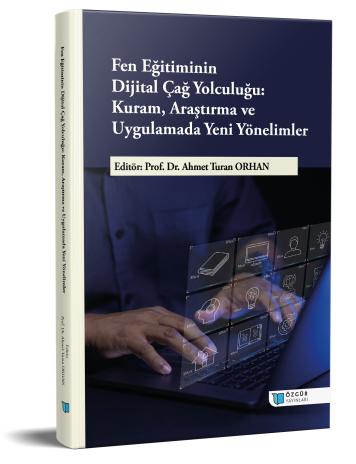
The Journey of Science Education in the Digital Age: New Directions in Theory, Research, and Practice.
Synopsis
The aim of this research is to examine the effect of the educational game called ‘Science Cups’, developed for science lessons, on students' learning process, based on student opinions. Designed based on colour and concept matching, this game was adapted from the Practical Cups mind and intelligence game to suit science topics. It was developed as an original material aiming to support skills such as establishing relationships between concepts, classification, and attention. The research was conducted using a case study design, one of the qualitative research methods, with 16 eighth-grade students attending a state secondary school in western Turkey during the 2024-2025 academic year. Participants were given forms containing open-ended questions after the game; the data obtained was analysed using descriptive analysis methods. The findings showed that students found the game both educational and enjoyable; it contributed to revising topics, better understanding concepts, and increasing interest in lessons. Students also stated that the game helped them establish cooperation within the group and made the learning process more effective. Most participants requested that such games be used more frequently in science lessons; some students suggested improvements such as including more clues on the game cards, making concepts more distinct, and limiting the playing time. The research concluded that the ‘Science Cups’ game positively influenced students' attitudes towards science lessons, increased their attention, participation and motivation, and made learning more permanent. In line with these findings, it is suggested that integrating game-based learning into teaching processes in a structured and purposeful manner could make science teaching more effective and engaging.
How to cite this book
License

This work is licensed under a Creative Commons Attribution-NonCommercial 4.0 International License.
Published
DOI
Categories
Copyright (c) 2025 Ahmet Turan Orhan; Erhan Ceylan- Özgür Özünlü- Oktay Göktaş- Selda Bakır- Ekrem Dağ- Kevser Şentürk- Ayberk Bostan Sarıoğlan- Esra Sayar- Erdem Gencal- Hasan Genç- Huriye Deniş Çeliker