
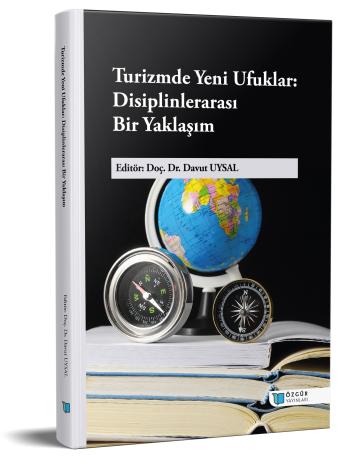
Turkish Tourist Guides' Perceptions of the Importance of English Language Skills: A Needs Analysis Study
Chapter from the book:
Uysal,
D.
(ed.)
2025.
New Horizons in Tourism: An Interdisciplinary Approach.
Synopsis
Tour guides play an important mediating role between visitors and the host community, fulfilling responsibilities that go beyond conveying information through cultural interpretation, offering contextualised narratives, and delivering support at various levels throughout the travel experience. The quality of guiding services is a significant variable directly influencing destination image, visitor satisfaction, and the long-term sustainability of the tourism sector. Although studies conducted in the Turkish context have largely focused on the English language needs of tourism students, there is a noticeable lack of up-to-date and comprehensive needs analysis research targeting tour guides actively working in the field. This clearly highlights the need for new research that identifies the actual communicative needs of tour guides working in Türkiye. This study was conducted to determine the English language needs of tour guides and tour guiding students. As a study designed within a descriptive survey framework, the study collected data through an online questionnaire administered to tour guiding students and actively working tour guides. The data were analysed using descriptive statistics and between-group comparisons. The findings have indicated that speaking is the most important English language skill in the context of tour guiding, and it is followed by the listening skill. Reading and writing skills were found to have played a more supportive role in professional practice. In addition, no statistically significant difference was found between active tour guides and tour guiding students in terms of the importance attributed to English language skills. Overall, the findings suggest that English language teaching programs for tour guides should be structured based on an English for Specific Purposes approach. In particular, programs are recommended to prioritise interaction-oriented activities grounded in professional scenarios, putting a strong emphasis on developing speaking and listening skills.
How to cite this book
License

This work is licensed under a Creative Commons Attribution-NonCommercial 4.0 International License.
Published
DOI
Categories
Copyright (c) 2025 Davut Uysal; Anıl Örnek- Mert Gürlek- Ufuk Uysal- Hatice Gençtürk- Handan Çelik Vaıllant- Hayat Çelik- Ayhan Yıldız- Öznur Sidal- Yasemin Uysal