
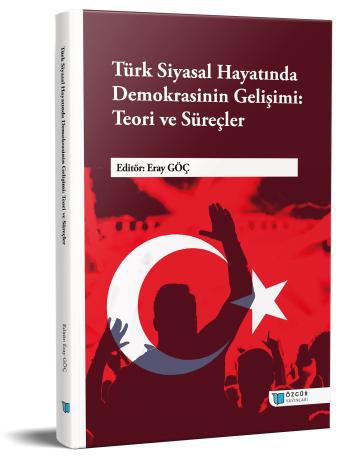
Efforts Towards Democratisation Between 1923 and 1938
Chapter from the book:
Göç,
E.
(ed.)
2025.
The Development of Democracy in Turkish Political Life: Theory and Processes .
Synopsis
This study examines Turkey’s democratization process between 1923 and 1938 from historical, political, and sociological perspectives. The transition from the Ottoman patrimonial structure to the centralized and secular Republic signified not only a regime change but also a transformation in political culture. Abolition of the Sultanate and Caliphate, educational and constitutional reforms aimed to establish popular sovereignty, yet the process evolved under an authoritarian bureaucratic modernization. The Sheikh Said, Ağrı, and Dersim revolts reinforced state-centered security policies and limited democratic initiatives. The Progressive and Liberal Republican Party experiments revealed the restricted scope of political pluralism. Granting women suffrage symbolized modernization but failed to ensure participatory democracy. The Six Arrows ideology, together with the Turkish History Thesis and Sun-Language Theory, shaped the national identity. Consequently, the 1923–1938 period functioned as a laboratory where authoritarian modernization and the quest for democracy coexisted in early Republican Turkey.
Keywords:
How to cite this book
License

This work is licensed under a Creative Commons Attribution-NonCommercial 4.0 International License.
Published
DOI
Categories
Copyright (c) 2025 Önder Aytaç Afşar; Eray Göç; Muhammet Ali Demir- Fecri Yıldırım- Selçuk Kahraman- Murat Ercan- Muhammet Yasin Elitok