
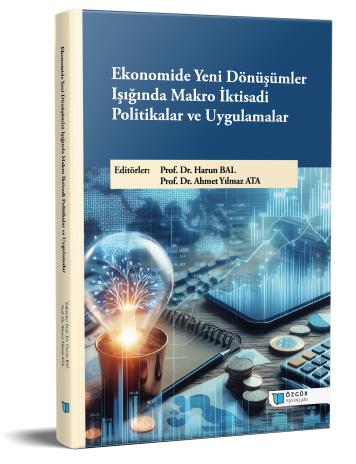
The Impact of New Protectionist Measures Implemented After the 2008 Crisis on Emerging Markets
Chapter from the book:
Bal,
H.
&
Ata,
A.
Y.
(eds.)
2025.
Macroeconomic Policies and Practices in Light of New Transformations in the Economy.
Synopsis
Although the origins of protectionism are known to be rooted in mercantilist thought, it is observed that protectionist policies tend to gain wider application particularly during periods of economic crisis. Following the 2008 global financial crisis, countries once again resorted to various methods that restricted international trade. These methods, consistent with the new protectionist approach, also encompassed a range of non-tariff measures. his study examines the effects of post-crisis protectionist measures on emerging markets. In addition, based on Turkey’s export and import data—which are directly related to international trade—the country’s position regarding these measures is analyzed. The findings indicate that trade-restrictive policies and instruments are predominantly adopted by developed countries, while emerging markets tend to be more exposed to such measures rather than implementing them. Furthermore, the results show that Turkey was adversely affected by the increase in export restrictions, particularly during the 2014–2017 period.
How to cite this book
License

This work is licensed under a Creative Commons Attribution-NonCommercial 4.0 International License.
Published
DOI
Categories
Copyright (c) 2025 Harun Bal- Ahmet Yılmaz Ata; Doğan Barak- Halim Tatlı- Fatih Akın- Ayşe Eryer- Rüya Ataklı Yavuz- Refika Görkem Yılmaztürk- Selen Savaşkan- İlknur Aşkın- Harun Bal- Koray Yıldırım- Esma Erdoğan- Süleyman Gürbüz- Nur Aydın- Ayşe Arı- Mehmet Ozan Akman- Bahadır Aybakan- Devran Deniz- Mustafa Orhan Özer- Gökhan Özkul- Özgenur Çakır Uysal- Tahsin Avcı- Emre Kılıç- Eren Ergen