
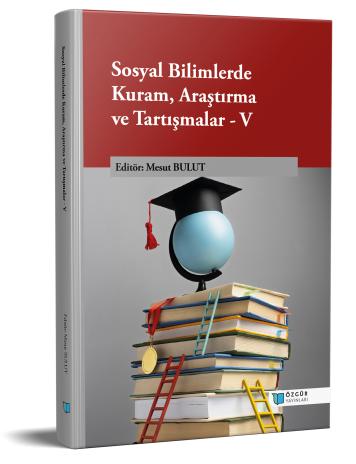
Games in Social Studies Lessons: Meaningful Learning, Motivation and Engagement, Collaboration and Social Interaction: Myth or Reality?
Chapter from the book:
Bulut,
M.
(ed.)
2025.
Theory, Research, and Debates in the Social Sciences - 5.
Synopsis
The purpose of this study is to examine the effects of game-based learning on students’ learning experiences in social studies lessons. A qualitative research approach was adopted, and the study was conducted using a phenomenological design. The participants consisted of middle school students who engaged in game-based activities during social studies lessons. Data were collected through semi-structured interviews, focus group discussions, student diaries, and classroom observations in order to capture students’ experiences in a multidimensional way. The findings were grouped under four main themes: (1) meaningful learning and knowledge retention, (2) motivation and classroom engagement, (3) collaboration and social interaction, and (4) the influence of game types. Results indicate that game-based activities contextualize knowledge, making it more permanent, while enhancing students’ motivation and engagement in lessons. They also promote social interaction and collaboration. In addition, different types of games were found to support students’ cognitive skills such as critical thinking, empathy, problem-solving, and quick recall. The limitations of the study include the focus on a specific student group and the short duration of the interventions. Therefore, future studies are recommended to be conducted with diverse samples, over longer periods, and by employing mixed-methods designs.
How to cite this book
License

This work is licensed under a Creative Commons Attribution-NonCommercial 4.0 International License.
Published
DOI
Categories
Copyright (c) 2025 Mesut Bulut; Murat Gökmen- Seda Gökmen- İlknur Demirbağ- Nurdan Kılıç- Yasin Demirci- Ziya Ersoy- Fatih Pala- Seyhan Bayram- Mesut Bulut