
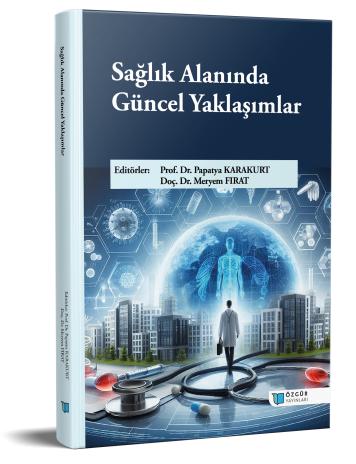
Hearing Screenings and Audiological Assessment Technologies in Children With Special Needs
Chapter from the book:
Karakurt,
P.
&
Fırat,
M.
(eds.)
2025.
Current Approaches in The Field of Health.
Synopsis
Children with special needs constitute a heterogeneous population characterized by developmental delays, neurological disorders, syndromic conditions, sensory impairments, and complex medical histories. In this group, hearing loss should be considered not only as a sensory impairment but also as a fundamental neurodevelopmental risk factor with decisive effects on language, communication, cognitive development, learning processes, and social participation. The literature shows that the prevalence of hearing loss in children with special needs is significantly higher than in their typically developing peers and that auditory problems are often attributed to primary impairments, leading to delayed diagnosis or overlooking.
This section takes a comprehensive look at the importance of hearing screening in children with special needs, the limitations of current screening approaches, and the assessment requirements specific to this population. It emphasizes that standard screening protocols are inadequate in addressing the individual and developmental differences of children with special needs; it discusses the applicability of behavioral assessment methods, the contribution of objective measurement techniques, and the necessity of multidimensional assessment models. In this context, audiological assessment technologies such as pure tone audiometry, acoustic immittance measurement, otoacoustic emissions, and auditory brainstem responses are presented along with their application characteristics, advantages, and limitations.
In conclusion, it is emphasized that hearing screenings in children with special needs should be planned within the framework of comprehensive approaches that are sensitive to age, developmental profile, and risk factors, combine objective and subjective methods, and are supported by regular follow-up. Strengthening early diagnosis and early intervention services contributes not only to improving individual developmental outcomes but also to ensuring equal opportunities, increasing social participation, and achieving long-term public health gains.
How to cite this book
License

This work is licensed under a Creative Commons Attribution-NonCommercial 4.0 International License.
Published
DOI
Categories
Copyright (c) 2025 Papatya Karakurt- Meryem Fırat; Amine Nur Arıkan- Ayçin Köycekaş- Yahya Ateşpolat- Müdriye Yıldız Bıçakçı- Arif Caner Erdoğan- Bilgenur Karaçor- Mehmet Elmalı- Bürke Çırçırlı- Mert Can Emre- Cihan Adanaş- Sezai Özkan- Elem Kocaçal- Ertuğrul Sarı- İlyas Ün- Esra Kuran- Eren Canbolat- Mahir Coşkun- Azad Duman- Merve Kandazoğlu Erdem- Betül Karabudak- Simge Erdal- Meryem Fırat- Burcu Demir Gökmen- Mine Cengiz- Naime Çelik- Rauf Melekoğlu- Ayse Sebnem Erenler- Sanem Can Sarıoğlu- Esra Buğra- Deniz Uğur Cengiz- Selen Özdemir- Şeyda Yetginler Memiş- Ümit Topcuoğlu- Yasin Özden- Zehra Güveren- Gül Bülbül Maraş- Ahmet Utuş