
A Study on Horizontal Skill Mismatch in Vocational Education in Türkiye
Chapter from the book:
Berkün,
S.
(ed.)
2025.
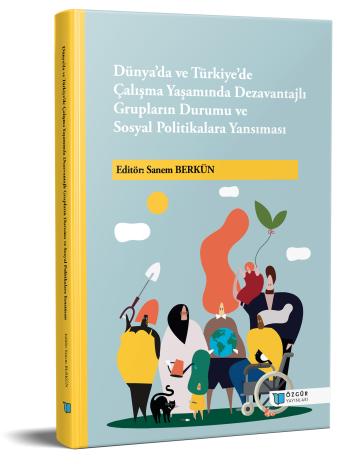
Disadvantaged Groups in Labor Life: Global and Turkish Perspectives on Social Policy.
Synopsis
This study aims to examine the employment processes of vocational and technical education graduates in Turkey within the framework of horizontal skills mismatch. Horizontal skills mismatch refers to the situation where the content of the jobs individuals work in does not match their field of study, and is considered an important indicator in evaluating the effectiveness of the education-employment relationship. In this study, the employment structures, graduation field-job fit, and graduate-sector matching problems of graduates from vocational and technical secondary education and associate degree programs were analyzed. The research utilized graduate tracking reports published by the Ministry of National Education and data from the Turkish Statistical Institute; the employment rates of vocational education graduates both within and outside their fields of study were evaluated through quantitative indicators. The findings reveal that a significant portion of vocational and technical secondary education graduates are employed outside their fields of study, indicating that horizontal skills mismatch is a structural characteristic. Similarly, for associate degree graduates, the education-employment fit differs according to fields and genders; particularly in the social and humanities fields, fit remains limited. These findings highlight the need to align vocational education curricula more strongly with the changing skills requirements of the labor market, to activate graduate tracking mechanisms, and to strengthen the link between education and employment.
How to cite this book
License

This work is licensed under a Creative Commons Attribution-NonCommercial 4.0 International License.
Published
DOI
Categories
Copyright (c) 2025 Sanem Berkün- Burcu Karaca- Özlem Demir- Ali Kemal Terzi- Rabia Balcı- Olcay Besnili Memiş- Adnan Gülerman- Jale Taşoğlu- Beyza Uçar- Mukadder Bektaş