
The Vulnerability of Migrant Labour and Occupational Health and Safety: Informality, Invisible Risks, and the Limits of Social Policy in Turkey
Chapter from the book:
Berkün,
S.
(ed.)
2025.
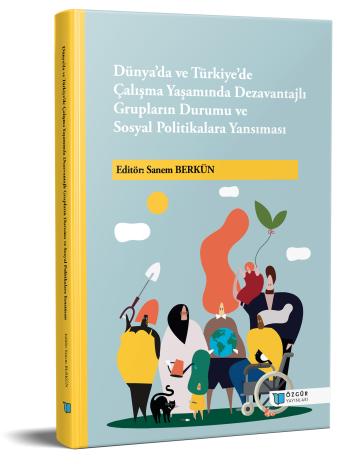
Disadvantaged Groups in Labor Life: Global and Turkish Perspectives on Social Policy.
Synopsis
International migration has profoundly transformed the structural dynamics of working life in recent years, and one of the most visible effects of this transformation has emerged in the field of occupational health and safety (OHS). In particular, workers with migrant or refugee status are employed globally in more hazardous, precarious, and informal jobs. This situation leads to the production of risks related to occupational accidents and occupational diseases through structural mechanisms rather than individual factors. In this section, the vulnerability of migrant labour in the field of OHS is first addressed within the context of labour market structures, legal statuses, and social policy preferences; subsequently, drawing on the international literature, global patterns regarding the OHS profile of migrant workers are examined, and the structural position of this workforce in the labour market is analysed through the case of Türkiye. With this regard, the temporary protection regime in Türkiye, limitations on access to work permits, and widespread informal employment increase the OHS risks faced by migrant workers, while this situation simultaneously leads to occupational accidents and occupational diseases largely failing to be reflected in official records, thereby constraining data-driven analyses and policy development. At the conclusion of the study, it is stated that the existing OHS and social policies are inadequate in responding to the problems of migrant workers, and that this issue is directly related to structural inequalities and social justice beyond technical regulations.
How to cite this book
License

This work is licensed under a Creative Commons Attribution-NonCommercial 4.0 International License.
Published
DOI
Categories
Copyright (c) 2025 Sanem Berkün- Burcu Karaca- Özlem Demir- Ali Kemal Terzi- Rabia Balcı- Olcay Besnili Memiş- Adnan Gülerman- Jale Taşoğlu- Beyza Uçar- Mukadder Bektaş