
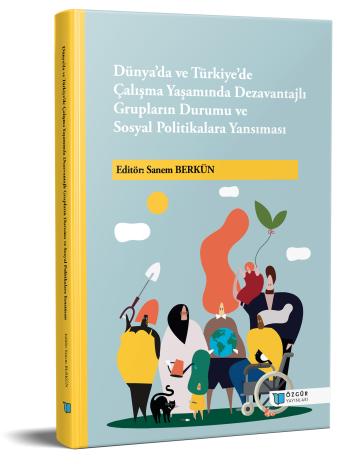
The Reintegration of Women into the Workforce After Childbirth: Social Policy Perspectives
Chapter from the book:
Berkün,
S.
(ed.)
2025.
Disadvantaged Groups in Labor Life: Global and Turkish Perspectives on Social Policy.
Synopsis
The process of women's return to work after childbirth is shaped not only by individual choices but also by gender roles, institutional practices, and the structural framework of social policies. This period represents a transitional phase in which women strive to balance their maternal roles with their professional identities, often encountering various structural barriers. In Turkey, legal regulations intended to facilitate women's reintegration into the workforce following childbirth such as maternity leave, breastfeeding breaks, and part-time work rights are significant tools. However, practical challenges in implementing these rights continue to restrict women's equal and sustained participation in the labor market. This study examines the scope, feasibility, and sustainability of support and incentive mechanisms provided by public institutions such as the Social Security Institution (SGK) and the Turkish Employment Agency (İŞKUR), aimed at promoting postpartum female employment in Turkey. Structural problems, including high rates of informal employment, sector-based discrimination, limited access to flexible work arrangements, and the disproportionate burden of caregiving placed on women, significantly undermine the effectiveness of existing social policies. Drawing on international best practices, the research offers comprehensive policy recommendations to support women’s postnatal reintegration into the labor force. In this context, the development of gender-sensitive social policies, the recognition of caregiving as a public responsibility, the promotion of flexible and secure work models, and the creation of women-friendly work environments are proposed as essential steps toward fostering sustainable and equitable labor market participation for women.
How to cite this book
License

This work is licensed under a Creative Commons Attribution-NonCommercial 4.0 International License.
Published
DOI
Categories
Copyright (c) 2025 Sanem Berkün- Burcu Karaca- Özlem Demir- Ali Kemal Terzi- Rabia Balcı- Olcay Besnili Memiş- Adnan Gülerman- Jale Taşoğlu- Beyza Uçar- Mukadder Bektaş