
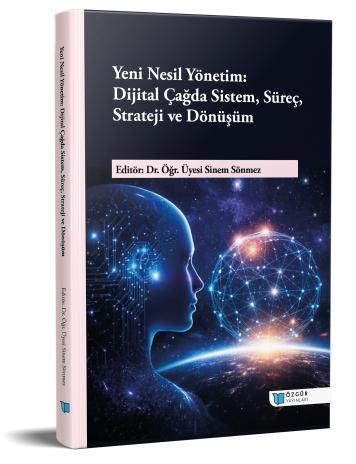
Occupational Health and Safety Practices in Radiology Units: Standards, Training and Inspection
Chapter from the book:
Sönmez,
S.
(ed.)
2025.
New Generation Management: Systems, Processes, Strategy and Transformation in the Digital Age.
Synopsis
Radiology departments are high-risk clinical environments where multiple occupational hazards coexist, including ionizing radiation, strong magnetic fields, contrast agents, and intensive workloads. Occupational health and safety (OHS) practices in these units are crucial not only for worker protection but also for patient safety and the continuity of healthcare services. This chapter examines OHS management in radiology departments within the framework of international standards set by organizations such as the IAEA, ICRP, and WHO, focusing on legislation, training, competence, auditing, and quality assurance processes. Findings indicate that an effective OHS program must be grounded in the principles of justification, optimization (ALARA), and dose limitation. Moreover, adopting the ISO 45001 management system, implementing ACR–AAPM technical standards for quality control, and maintaining a continuous cycle of education and inspection are essential for sustaining safety culture. In Turkey, occupational regulations under Laws No. 6331 and 3153, along with the Radiation Safety Regulation, ensure safe working hours, dose monitoring, and radiation leave for radiology staff. In conclusion, establishing a strong safety culture based on international standards—supported by systematic education, monitoring, and continuous improvement—remains the most effective approach to safeguarding both healthcare workers and patients in radiology departments.
How to cite this book
License

This work is licensed under a Creative Commons Attribution-NonCommercial 4.0 International License.
Published
DOI
Categories
Copyright (c) 2025 Sinem Sönmez; Ergül Söylemezoğlu- Neşe Kafa- Özden İbrahimağaoğlu- Miray Celepli Sütbaş- Gaye Atilla- Bülent Bayrak- Özge Öztürk- Çiğdem Pank Yıldırım- Duygu Akyüz- Şilan Özdamar- Ayhan Işık- Aytuğ Sözüer- Bünyamin Çelebi- Mehmet Aytekin- Lale Karasu- Emre Karasu- Mehmet Güven- Abdullah Fırat