
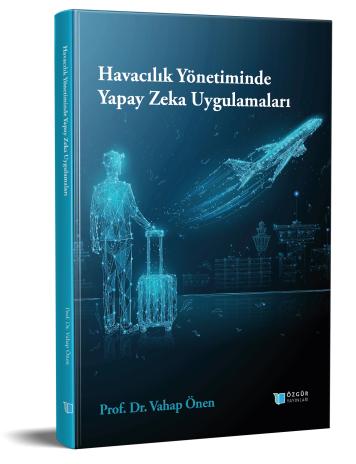
Digital Transformation and Artificial Intelligence in Aviation: Employee Roles, Competencies and Ethical Issues
Chapter from the book:
Önen,
V.
(ed.)
2025.
Artificial Intelligence Applications in Aviation Management.
Synopsis
This study examines the effects of digital transformation and artificial intelligence in the aviation sector on employee roles, digital competencies, and ethical issues from an organizational behavior perspective. Digital transformation often brings to mind changes in technological infrastructure (Faruque et al., 2024). However, today it requires an understanding that also includes organizational structure and cultural processes (Wu et al., 2025). On the other hand, along with organizational change and transformation, artificial intelligence applications enable the automation of routine tasks while directing employees towards analytical and strategic roles (Oyekunle and Boohene, 2024). Consequently, role ambiguity, psychological stress, and the need for adaptation may increase (Kumar et al., 2024). In this context, theories of organizational justice (Greenberg, 1987) and perceived organizational support (Eisenberger, 1986) offer an important framework for understanding employees' adaptation, motivation, and commitment levels to digital transformation processes. Employees' digital competencies and continuous learning capacities are critical for effectively utilizing artificial intelligence systems and maintaining technological adaptation. Ethical leadership (Brown and Treviño, 2006) ensures that technological applications are ethical and value-based, while also supporting employee trust, job satisfaction, and organizational commitment. Furthermore, ethical issues such as data privacy, algorithmic fairness, and the distribution of responsibility are decisive in the effectiveness of human-machine collaboration. Ultimately, the success of digital transformation in aviation depends on the harmonious and balanced management of technology and the human (employee) factor. Fair processes, organizational support, ethical leadership, a culture of continuous learning, and effective management of human-machine collaboration stand out as fundamental and effective elements in the sustainable success of digital transformation projects.
How to cite this book
License

This work is licensed under a Creative Commons Attribution-NonCommercial 4.0 International License.
Published
DOI
Categories
Copyright (c) 2025 Vahap Önen; Mustafa Altıntaş- Seda Çeken- Teoman Erdağ- Elvan Karaarslan Göyenç- Tevfik Uyar- Ali Akbaba- Nil Konyalılar- Selvi Vural- Vahap Önen- Ayşe Küçük Yılmaz- Büşra Karakuş