
Biotechnological Approaches in Contemporary Art
Chapter from the book:
Tanrıverdi,
Y.
(ed.)
2025.
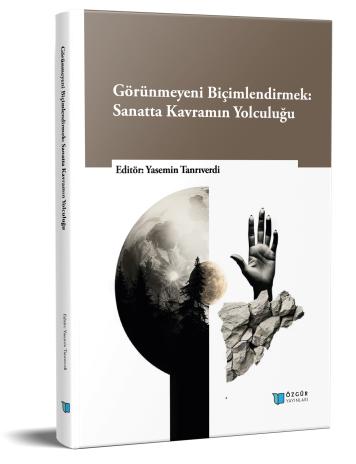
Shaping the Invisible: The Journey of Concept in Art.
Synopsis
The integration of biotechnology into contemporary art has given rise to bioart, an interdisciplinary field that combines traditional artistic expression with advanced scientific research. This practice, often referred to as bioart, invites artists to engage with living systems, genetic material, and ecological processes; transcending the boundaries of traditional creativity, it questions the biopolitical and ethical dimensions of life itself. This intersection of art and technology is the culmination of a historical process extending from the mechanical replication of photography to the process- and code-focused nature of video and digital art. Art no longer merely reflects reality but also questions the power to manipulate the code of life itself. The fundamental principles of bioart are the use of living materials (cells, bacteria, DNA), the manipulation of these materials through genetic engineering, and the perception of the work as a dynamic and time-bound process rather than a finished object. This elevates art to an interdisciplinary platform requiring collaboration across multiple disciplines, including biology, chemistry, and ethics. Pioneering works such as Eduardo Kac's Genesis project, which questioned the fragility of the genetic code, and Oron Catts/Ionat Zurr's Victimless Leather, which questioned the commodification of life, have reinforced art's role as a tool for ethical and philosophical inquiry. Bioart aestheticizes invisible forms like bacteria and cells in petri dishes. In Türkiye, artists such as Selin Balcı and Nergiz Yeşil have added a local dimension to this field with ecological concerns and sustainability-focused approaches.
This study attempts to identify the contours of biotechnological approaches within contemporary art practices, examining how these artistic endeavors shape and are influenced by the socio-technological zeitgeist. Significant works of bioart that exemplify the dynamic interaction between biotechnology and artistic expression are examined, and how these works can serve as tools for social reflection, critique, and transformative dialogue are discussed. Bringing together the complex narratives of art and science, this study aims to highlight the innovative ways contemporary artists explore the biotechnological landscape and consider their art's place within it.
How to cite this book
License

This work is licensed under a Creative Commons Attribution-NonCommercial 4.0 International License.
Published
DOI
Categories
Copyright (c) 2025 Yasemin Tanrıverdi; Seyit Mehmet Buçukoğlu- Sefa Ersan Kaya- Gültekin Akengin- Asuman Aypek Arslan- Tuba Batu- Ece Yücel- Şule Sayan- A. Sultan Karaoğlu- Arzu Parten Altuncu- Emine Jessica McKIE