
The Visual Regime of Everyday Objects: The Case of the 18th Istanbul Biennial
Chapter from the book:
Tanrıverdi,
Y.
(ed.)
2025.
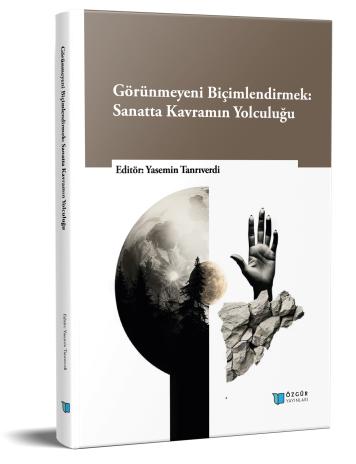
Shaping the Invisible: The Journey of Concept in Art.
Synopsis
The status that everyday objects acquire in an artistic context demonstrates that they are redefined within a dynamic regime of visibility shaped by cultural, historical, and spatial encounters rather than a fixed meaning. The object produces a new field of truth through the discursive structures, spatial arrangements, and the relationship it establishes with the viewer in the context in which it is exhibited outside its functional usage environment. In this context, the 18th Istanbul Biennial offers a suitable sample for examining which layers of representation and meaning are produced when everyday objects are included in institutional circulation. The object-based practices featured in the Biennial reveal how ordinary objects are reconstituted independently of their material existence through cultural memory, spatial experience, and social context. In this context, the study critically analyzes the works of Stéphanie Saadé, Abdullah Al Saadi, Celina Eceiza, and Khalil Rabah, which are relevant to the subject, using critical discourse analysis. It evaluates them analytically due to the interactions they establish between space, memory, social relations, and political indicators. The sample works examined in the study reveal that the processes of displacement transform the object's truth, producing a multi-layered visual regime of truth by generating an aesthetic, ideological, and socio-cultural field of knowledge. In this respect, the study offers an original contribution to contemporary art theory regarding the changing status of the object.
How to cite this book
License

This work is licensed under a Creative Commons Attribution-NonCommercial 4.0 International License.
Published
DOI
Categories
Copyright (c) 2025 Yasemin Tanrıverdi; Seyit Mehmet Buçukoğlu- Sefa Ersan Kaya- Gültekin Akengin- Asuman Aypek Arslan- Tuba Batu- Ece Yücel- Şule Sayan- A. Sultan Karaoğlu- Arzu Parten Altuncu- Emine Jessica McKIE