
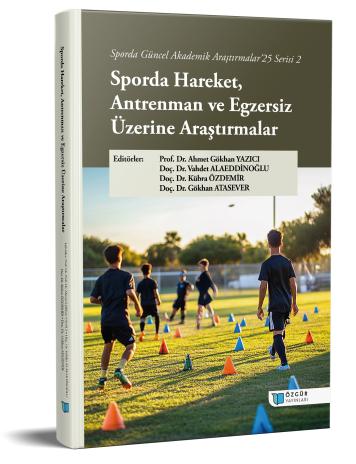
Musculoskeletal Maturation in Childhood and Adolescence: Muscle-Bone Unit, Peak Bone Mass, and Resistance Training Adaptations
Chapter from the book:
Yazıcı,
A.
G.
&
Alaeddinoğlu,
V.
&
Özdemir,
K.
&
Atasever,
G.
(eds.)
2025.
Research on Movement, Training, and Exercise in Sports.
Synopsis
Childhood and adolescence are a critical developmental window during which the musculoskeletal system rapidly matures and the foundation for lifelong health, physical fitness, and performance is laid. During this period, height and body weight increase significantly, while body composition, motor skills, and muscle-bone interaction also change significantly. Therefore, when assessing growth, performance, and injury risk, it may be insufficient to rely solely on chronological age, as growth rate, neuromuscular control, and maturity level vary among children of the same age group. Biological maturation indicators such as bone age (Tanner stage/sexual maturity rating (SMR)) and peak height velocity (PHV) are particularly important in planning training loads and technique-focused work, and rapid morphological changes can cause temporary fluctuations in coordination and movement control.
In terms of bone health, childhood and adolescence represent the period during which peak bone mass and bone strength are achieved. The bone response is not limited to mineral accumulation but also includes components of geometry and structural strength. Since mechanical deformation and accompanying cellular adaptation are at the core of osteogenic stimulation, regular and appropriately planned mechanical loading is necessary for long-term gains. The “muscle-bone unit” approach emphasizes that load consists not only of body weight but also of forces produced by muscle contractions and impact/acceleration components.
Adaptation to resistance training is related to maturation. Strength gains in the pre-pubertal period are mainly due to neuromuscular learning and coordination, while post-puberty gains are due to structural and hormonal contributions. When training and physical activity are applied to children, fundamental principles such as technical instruction, gradual progression, adequate rest and recovery, effective warm-up, and qualified supervision should be prioritized to ensure safe implementation.
Keywords:
How to cite this book
License

This work is licensed under a Creative Commons Attribution-NonCommercial 4.0 International License.
Published
DOI
Categories
Copyright (c) 2025 Ahmet Gökhan Yazıcı- Vahdet Alaeddinoğlu- Kübra Özdemir- Gökhan Atasever; Sefer Karabağ- Fatih Kıyıcı- Ömer Yaşa- Muharrem Ogan- Mehmet Karasu- Gökhan Atasever- Ahmet Dal- Fatmanur Er- Yusuf Ziya Doğru- Elif Akkuş- Alperen Bektaş