
Internal Control and Risk Management
Chapter from the book:
Yücel,
R.
&
Ayyıldız,
Y.
(eds.)
2025.
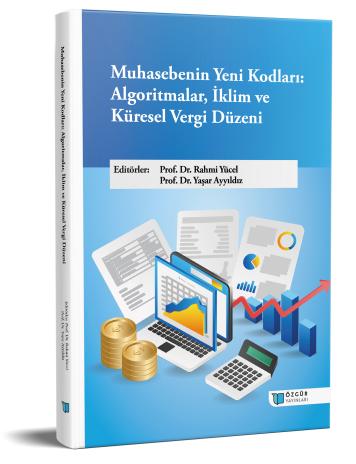
The New Codes of Accounting: Algorithms, Climate, and the Global Tax System.
Synopsis
This chapter comprehensively examines the theoretical foundations, applications, and transformation in the digital age of internal control and risk management systems in modern organizations. Based on the COSO Internal Control-Integrated Framework and the Enterprise Risk Management (ERM) framework, the five components and seventeen principles of internal control are analyzed in detail. The study evaluates the integration of internal control and risk management from the perspective of the Three Lines of Defense Model, emphasizing the strategic role of internal audit in this process.
Presenting methodologies for the evaluation and measurement of internal control effectiveness—including control self-assessment, control tests, continuous monitoring, and continuous auditing approaches—this chapter provides an in-depth analysis of the opportunities and threats brought by the digital age, artificial intelligence and data analytics applications, cybersecurity risk management frameworks, and multi-layered defense strategies. While the role of artificial intelligence in internal control is addressed in the context of fraud detection, process mining, and predictive risk scoring, critical risks such as algorithmic bias, explainability, and data quality are also discussed.
In this chapter, the integration of ESG factors into risk management and internal control systems is comprehensively examined in terms of identifying, assessing, and effectively managing environmental, social, and governance risks. The integration of international standards such as the NIST Cybersecurity Framework, ISO 27001, and COBIT with internal control systems is evaluated from the perspective of cyber resilience and business continuity. Consequently, presenting the latest developments, research trends, and future perspectives in the field of internal control and risk management, this study offers strategic recommendations on how organizations can strengthen their internal control and risk management systems to achieve sustainable success in a changing risk environment.
How to cite this book
License

This work is licensed under a Creative Commons Attribution-NonCommercial 4.0 International License.
Published
DOI
Categories
Copyright (c) 2025 Rahmi Yücel- Yaşar Ayyıldız; Rahmi Yücel- Fatih Eroğlu- Onur Özevin- Burcu Şimşek- Derya Yücel- Murat Özcan- Mehmet Günlük- Yaşar Ayyıldız- Emine Nur Yüksel- Serdar Şahin