
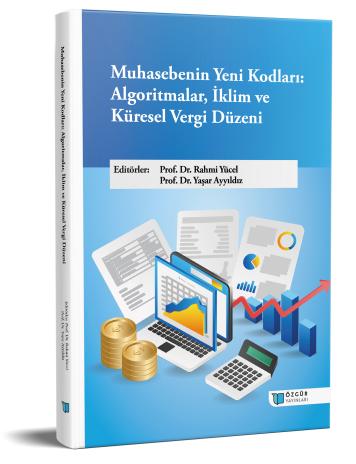
Global Paradigm Shift in Taxation and the Transformation of the Turkish Tax System During the Adaptation Process: The 2020-2025 Period
Chapter from the book:
Yücel,
R.
&
Ayyıldız,
Y.
(eds.)
2025.
The New Codes of Accounting: Algorithms, Climate, and the Global Tax System.
Synopsis
The dynamics of digitalization and globalization in the 21st century have compelled a fundamental transformation of the international tax regime. The Base Erosion and Profit Shifting (BEPS) Project, led by the Organisation for Economic Co-operation and Development (OECD), and the subsequent Two-Pillar Solution are constructing a new paradigm aimed at reallocating taxing rights and implementing a global minimum tax.
This study provides a comprehensive analysis of this global transformation between 2020 and 2025 and examines Turkey's adaptation process. The research, conducted through a qualitative document analysis method, is based on a systematic review of OECD documents, national legislation, institutional reports, and academic literature.
The study traces Turkey's roadmap from the initial phase of institutionalizing BEPS 1.0 tools such as the Common Reporting Standard (CRS), Country-by-Country Reporting (CbCR), and the Multilateral Instrument (MLI), to the second phase, where in 2024–2025 Turkey adopted legislation on the Global Minimum Tax (Pillar Two), marking a strategic turning point.
The analysis reveals that the adaptation process offers Turkey opportunities to protect its tax base, enhance transparency, and strengthen its role in international cooperation, while simultaneously presenting significant challenges in terms of administrative capacity, competitiveness, and complex implementation costs.
The study argues that for 2026 and beyond, Turkey must transition from a phase of "tactical compliance" to one of "strategic governance." To facilitate this shift, it proposes a tripartite strategic framework: AI-enhanced administrative deepening, Global Base Erosion (GloBE) Rules-Compliant competitiveness engineering, and proactive international diplomatic engagement. In conclusion, the study emphasizes that the completion of legislative alignment is not the ultimate goal; true success lies in the capacity to effectively and equitably administer these rules in line with national interests.
How to cite this book
License

This work is licensed under a Creative Commons Attribution-NonCommercial 4.0 International License.
Published
DOI
Categories
Copyright (c) 2025 Rahmi Yücel- Yaşar Ayyıldız; Rahmi Yücel- Fatih Eroğlu- Onur Özevin- Burcu Şimşek- Derya Yücel- Murat Özcan- Mehmet Günlük- Yaşar Ayyıldız- Emine Nur Yüksel- Serdar Şahin