
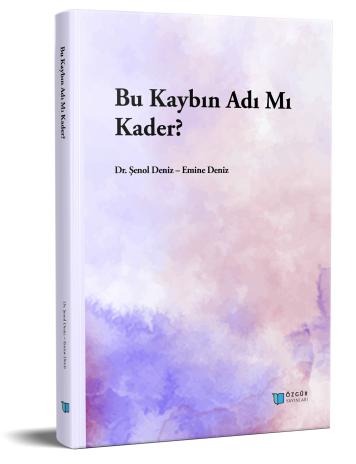
Is This Loss Called Fate?
Synopsis
Some books are not written to be read; they are written to be passed through. Is This Loss Called Fate? belongs precisely to this kind of writing. It does not seek to inform the reader, but to unsettle them; not to comfort, but to invite them into an uncompromising confrontation. The text stands at a deliberate distance from easy consolations that hastily name loss in order to tame it. Because some losses do not grow lighter when they are named. Some wounds are not healed by being closed, but by being taken seriously. This book is not concerned with what happens to a person, but with the void that opens inside them afterward. And within that void, it searches quietly, insistently for the possibility of remaining human.
This work approaches the idea of fate not as a romantic refuge of surrender, but as a threshold where meaning must be negotiated. The question “Is this loss called fate?” does not emerge from passive acceptance, but from conscious resistance. The author/s give/s voice to a subject who bargains with fate rather than kneels before it. Without sanctifying suffering, without turning pain into a didactic fetish, yet without denying the irreversible transformation that devastation brings, the narrative moves forward with clarity and restraint. Its central claim is firm and unembellished: no unhappiness is magnificent. Pain is not noble. Trauma offers no guarantee of wisdom. And yet, the human being remains the only creature capable of constructing meaning even in the midst of collapse. This meaning does not justify suffering, but it renders life bearable.
The book understands trauma not as an individual weakness, but as a rupture in meaning itself. Trauma is not merely an event; it is the breaking of the silent contract a person holds with the world. Trust, continuity, and predictability are suddenly suspended. One loses not only the past, but the future as well. At this point, the text reclaims the concept of resilience from the shallow optimism of popular psychology and restores it to its rightful place. Resilience is not strength. It is the ability not to disintegrate after being shaken. It is the difficult art of learning to live not despite pain, but alongside it.
Throughout the work, Bowlby’s attachment theory, Anna Freud’s observations on war-affected children, and Françoise Dolto’s relational understanding of development are woven into the narrative with literary sensitivity and scientific integrity. Yet the book never hides behind academic detachment. Knowledge here matters only insofar as it touches the human heart. Theory is embedded within lived experience; concepts are tested against vulnerability. Because no one heals alone. A person survives only when they are seen, heard, and taken seriously by another. This book stands as a textual form of such witnessing.
Is This Loss Called Fate? reflects on the traces trauma leaves in childhood, adulthood, and collective life simultaneously. War, displacement, poverty, abuse, and emotional neglect are treated not merely as personal misfortunes, but as wounds within a shared memory. The text insists that healing is never solely an individual matter; it is an ethical and social responsibility. The maturity of a society can be measured by how it treats its wounded. Every discourse that silences the victim, that confuses healing with the absolution of the perpetrator, produces new injuries. This book refuses such silence.
Aesthetics in this work is not a veil that beautifies pain, but a means of bearing its weight. Humor, imagination, and narrative are approached not as forms of escape, but as modes of resistance. As long as a person can imagine, they have not surrendered. Narrative does not silence trauma; it confines it. Once pain is put into words, it can no longer invade every corner of existence. It gains shape, boundary, and form. This form does not consume the individual; it becomes something that can be carried. One idea echoes persistently throughout the book: when a person turns experience into story, they reclaim agency over their wound.
This text does not glorify healing. It offers no quick solutions, no luminous prescriptions, no motivational slogans. On the contrary, it acknowledges that healing is often disordered, nonlinear, marked by relapses and regressions. It rejects the promise of a “return to normal” after trauma. Because a person does not remain the same after devastation. Yet they do not disappear either. They may come into being again differently. This difference is more fragile, yet deeper; more cautious, yet more real. Hope here is not an emotion, but an action: the insistence on maintaining a bond with life despite the wound.
Is This Loss Called Fate? liberates the notion of fate from passivity. Fate, in this book, is not an absolute decree, but a space where meaning is negotiated. One cannot choose what happens to them, but one can choose the meaning they assign to it. This choice is neither heroic nor romantic. It is often quiet, exhausted, and stubborn. But it is real. And what is real, more often than not, carries the power to heal.
This work speaks to those who talk from within pain. To those who have been shattered yet remain standing. To those who have lost something essential without losing themselves entirely. To those who seek neither consolation nor reassurance but understanding. The book does not soothe its reader; it takes them seriously. Because what heals a human being is rarely hope, it is the experience of being seen.
And the book leaves behind a final whisper:
Yes, you were broken.
Yes, you were diminished.
But you are still here.
And that is no small thing.
How to cite this book
License

This work is licensed under a Creative Commons Attribution-NonCommercial 4.0 International License.
Published
ISBN
DOI
Statistics
Categories
Copyright (c) 2026 Şenol Deniz- Emine Deniz