
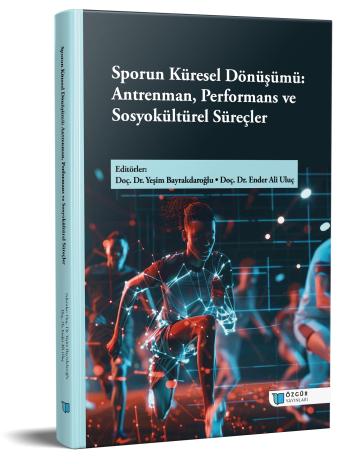
The Social Role of Sport in Preventing Violence and Peer Bullying Among Young People
Chapter from the book:
Bayrakdaroğlu,
Y.
&
Uluç,
E.
A.
(eds.)
2026.
The Global Transformation of Sport: Training, Performance, and Sociocultural Processes.
Synopsis
Participation in sports is considered an important social tool that shapes the social behavior of young people and reduces the risk of violence and peer bullying. Regular physical activity strengthens individuals' intra-group interactions, supports cooperation and team spirit, and contributes to the development of social responsibility and empathy skills. This process increases young people's conflict resolution and emotional control capacities, enabling them to manage negative behaviors.
Team sports and structured sports environments allow students to engage in safe and rule-based social interactions. These environments support the learning of norms such as fair play, mutual respect, and cooperation, reducing the likelihood of bullying behaviors. Self-confidence and emotional regulation skills gained through sports enable young people to develop a protective mechanism against aggressive and violent behaviors.
School and community-based sports programs function as systematic interventions that strengthen young people's social skills and reduce bullying behaviors. These programs have positive effects on individuals' social interactions, increase group belonging and solidarity, and contribute to the creation of a safe social environment.
In conclusion, it can be stated that participation in sports plays a critical role in the healthy social development of young people, both individually and collectively.
How to cite this book
License

This work is licensed under a Creative Commons Attribution-NonCommercial 4.0 International License.
Published
DOI
Categories
Copyright (c) 2026 Yeşim Bayrakdaroğlu- Ender Ali Uluç; Büşra Çetin- Canan Kışlalıoğlu- Ebru Karakuş- Kaan Karakuş- Emrah Barkın- Mehmet Bilgin Karademir-Yasin Yıldız