
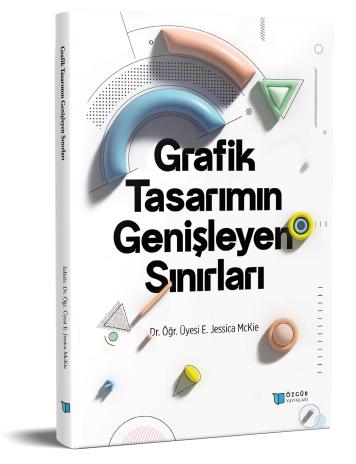
Expanding Frontiers of Graphic Design
Synopsis
While graphic design has historically been seen as a discipline synonymous with print culture and visual editing practices, it has transformed into a much broader and more dynamic field of production today. The acceleration of digitalization, the proliferation of interactive media environments, and especially the integration of artificial intelligence technologies into design processes are fundamentally changing both the tools and ways of thinking in graphic design. Design is no longer merely about producing visual forms; it is a strategic creative process that constructs user experiences, creates interactive systems, and generates meaning across different media layers.
“The Expanding Boundaries of Graphic Design” aims to open up a space for reflection that addresses this transformation from different perspectives. This book, which considers the changing nature of graphic design not only as a technological development but also as a cultural and conceptual transformation, opens up a discussion on the discipline's new forms of expression, production methods, and communication practices. The point that design has reached today points to a multi-layered production field that goes beyond two-dimensional surfaces, intertwined with screens, gaming environments, data streams, and physical spaces.
The book consists of six chapters, each highlighting a different area of expansion within graphic design. The first chapter establishes the theoretical framework of graphic design by addressing its interdisciplinary nature and evolving application areas over time. The second chapter examines the relationship between visual communication design and motivation, persuasion, and user participation processes through the lens of gamification; the behavioral and experience-oriented aspects of design are discussed. The third chapter addresses the transformation of digital interface design in the context of graphical user interfaces and AI-supported systems, evaluating the new possibilities of user experience design. The fourth chapter examines AI-supported character design from the perspective of game culture and visual semiotics; revealing the narrative and representational power of design in interactive media environments. The fifth chapter focuses on the production processes of three-dimensional digital assets through photogrammetry technology, demonstrating how design is reshaped by new production techniques and tools. The final chapter addresses the relationship between graphic design and urban space in the context of augmented reality; revealing how design expands towards layered and interactive narrative forms that integrate with the physical environment.
The picture that emerges from the combination of these chapters clearly shows that graphic design is no longer merely a visual arrangement practice. Today's designer; Graphic design has become a versatile creator, designing interfaces, creating game experiences, visualizing data, producing three-dimensional worlds for digital environments, and adding digital layers to physical spaces. In this sense, graphic design continues to explore new boundaries as one of the most dynamic and transformative fields of contemporary visual culture.
This book aims to provide an intellectual foundation for researchers, students, and design professionals who want to understand the changing nature of graphic design and develop new discussions about the future of the discipline. We believe that these studies, approached from different perspectives, will make visible the expanding horizons of design and inspire readers to rethink their own creative practices.
I would like to thank all the authors who contributed to the creation of this work, and I hope that the book will make meaningful contributions to academic and creative discussions in the field of graphic design.
Chapters
How to cite this book
License

This work is licensed under a Creative Commons Attribution-NonCommercial 4.0 International License.
Published
ISBN
DOI
Statistics
Categories
Copyright (c) 2026 E. Jessica Mckie; Seyit Mehmet Buçukoğlu- E. Jessica Mckie- Mesut Usta- Erkan Özkarakaş- Onur Şahin Karakuş- Zeynep Dağlı Curalı