
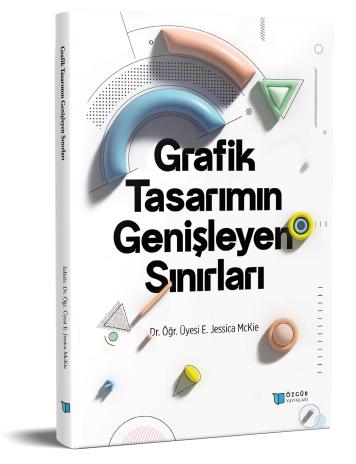
Interdisciplinary Transitions in Graphic Design and Expanding Application Areas
Chapter from the book:
Mckie,
E.
J.
(ed.)
2026.
Expanding Frontiers of Graphic Design.
Synopsis
This study aims to examine the transformation undergone by graphic design within its historical development process from an interdisciplinary perspective, analysing the field's expanding application practices within a theoretical and conceptual framework. Initially shaped around printing technologies and typographic layout practices, graphic design has been positioned as a rational, functional, and systematic field of communication alongside modernism; within the digitalisation process, it has evolved into a multi-layered structure encompassing time, movement, interaction, and data-based production forms. The study examines the transitional relationships established by graphic design with visual arts, architecture, installation, performance, public space, and digital media, discussing how these interactions transform the ontological status of the design object. In particular, the blurring of boundaries between the art object and the communication object is evaluated in the context of the designer's transition from a technical practitioner to a strategic thinker and cultural producer. Furthermore, the current role of graphic design is analysed through artificial intelligence, data visualisation, user experience design, and system-oriented production approaches. The study argues that graphic design is not only an aesthetic practice of arrangement but also a dynamic form of thinking and production that integrates different disciplines, generates public discourse, and constructs cultural meaning. In this context, graphic design is being redefined as a flexible and integrative platform that transcends disciplinary boundaries in the contemporary world.
How to cite this book
License

This work is licensed under a Creative Commons Attribution-NonCommercial 4.0 International License.
Published
DOI
Categories
Copyright (c) 2026 E. Jessica Mckie; Seyit Mehmet Buçukoğlu- E. Jessica Mckie- Mesut Usta- Erkan Özkarakaş- Onur Şahin Karakuş- Zeynep Dağlı Curalı