
The Use of Artificial Intelligence in Graphical User Interfaces
Chapter from the book:
Mckie,
E.
J.
(ed.)
2026.
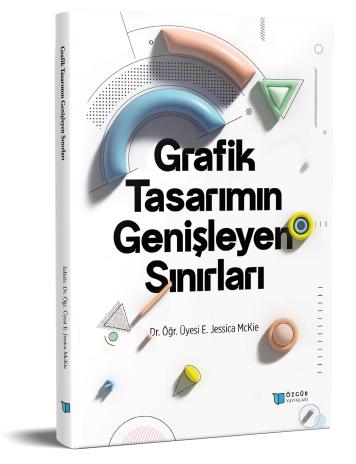
Expanding Frontiers of Graphic Design.
Synopsis
A graphical user interface (GUI) is a system that allows users to interact with computers through symbols, icons, and visual metaphors. It visually combines command-data connections by comparing them and presents a usability. Historically, Vannevar Bush's Memex design stands out as an early conceptual example. Douglas Engelbart's NLS system, Alan Kay's work, and Xerox PARC research provided the validation of the modern graphical interface. Graphical interfaces were institutionalized in administrative devices such as the Xerox Alto, Apple Lisa, and Macintosh; Windows 95 brought them to the masses. They were transferred from the panel of timekeeping texts to mobile devices and expanded through touch, voice, and gestures.
A graphical user interface consists of basic packages such as widgets, icons, menus, buttons, and scroll bars. The design approach has evolved over the years from skeuomorphic to flat (smooth) design.
Artificial intelligence is recognized as the science that produces intelligent machines; traditionally, the Dartmouth Conference and the Turing Test are considered significant milestones. Machine learning, deep learning, large language models (LLM), and evolutionary neural networks (CNN) are described as subfields of artificial intelligence. LLM have limitations such as hallucination, broad scope, and up-to-dateness issues.
Artificial intelligence is present in graphical user interface applications such as autocompletion, personalization, and adaptive applications. It is also used in the design process for areas such as automated layout suggestions, color changes, accessibility checks, and user performance simulation.
How to cite this book
License

This work is licensed under a Creative Commons Attribution-NonCommercial 4.0 International License.
Published
DOI
Categories
Copyright (c) 2026 E. Jessica Mckie; Seyit Mehmet Buçukoğlu- E. Jessica Mckie- Mesut Usta- Erkan Özkarakaş- Onur Şahin Karakuş- Zeynep Dağlı Curalı