
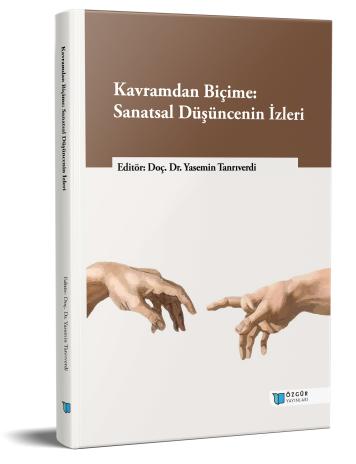
The Subversion of Representation: Gülsün Karamustafa's Artistic Strategies in the Context of a Critique of Orientalist Discourse
Chapter from the book:
Tanrıverdi,
Y.
(ed.)
2026.
From Concept to Form: Traces of Artistic Thought.
Synopsis
This article conceptualizes Orientalism not merely as an aesthetic fashion or painting tradition specific to the nineteenth century, but as a regime of representation and a mechanism of power operating through the production and circulation of knowledge about the East. Drawing on Edward Said’s analysis of Orientalism and the theoretical framework concerning the relationship between discourse and power, the study argues that representation is not simply an act of “showing,” but also a mechanism that positions the subject and reproduces cultural hierarchies. Within this framework, the article examines the artistic practice of Gülsün Karamustafa, who reintroduces the Orientalist visual repertoire into circulation while transforming it through strategies such as fragmentation, multiplication, decontextualization, and performative reframing.
Through an analysis of four projects produced by Gülsün Karamustafa between 1998 and 2000 that address Orientalism, the article demonstrates how the artist reconstructs the Orientalist image not merely as an object of critique but as a tool that renders visible the power relations inherent in representation. Beginning with Presentation of an Early Representation, the artist recontextualizes a historical visual source within a contemporary framework; in Fragmenting the Fragments and Reinforcement Series for Oriental Fantasies, she exposes the regime of gaze by dismantling the figurative structure of Orientalist painting; and in the project Stolen Ideas, she transforms the relationship between the image and regimes of copyright, circulation, and value into a performative intervention. These works collectively constitute the central axis of the article’s discussion.
How to cite this book
License

This work is licensed under a Creative Commons Attribution-NonCommercial 4.0 International License.
Published
DOI
Categories
Copyright (c) 2026 Yasemin Tanrıverdi; Arzu Parten Altuncu- Yıldız Örücü- Emel Güray- Ekrem Altuncu- Metin Coşkun- Lütfiye Tatar- Abdülkadir Dündar