
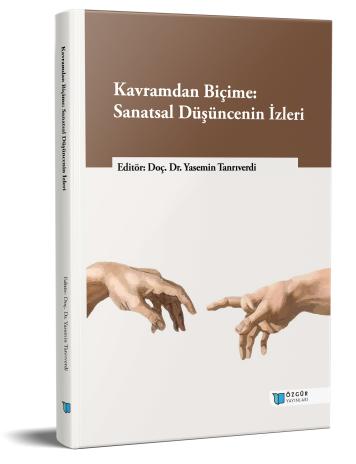
Material, Light, and Reflection: The Spatial Impact of Silver in Sculpture
Chapter from the book:
Tanrıverdi,
Y.
(ed.)
2026.
From Concept to Form: Traces of Artistic Thought.
Synopsis
Silver (Ag) is not merely a metal of high economic value; it is a powerful aesthetic tool capable of transforming space through its unique relationship with light. Its high reflectivity, formability, surface treatability, and the patina that evolves over time elevate it beyond an ordinary sculptural material. A silver surface does not merely reflect light; it refracts, multiplies, and disperses it, redefining the visual boundaries of the space. Therefore, a silver sculpture is not simply a volumetric form—it exists as a dynamic experiential field shaped by the continuous interaction between the viewer, the environment, and light. While materials in sculpture are often considered as carriers of form, in silver, the surface itself becomes a meaning-generating element. A highly polished surface draws the space inward, blurring boundaries, while matte, textured, or oxidized surfaces alter the distribution of light, transforming the perception of volume. In this way, a silver sculpture turns its architectural surroundings from a passive backdrop into an active component of the artwork. Reflections that shift with the viewer’s movement ensure that the work is continually re-created from every perspective.
Within the scope of this study, the spatial impact of silver and briht metal surfaces in sculpture will be examined from both materials science and aesthetic theory perspectives. Works by artists from different periods and approaches will be analyzed to explore the formal, perceptual, and conceptual consequences of silver’s interaction with light. Particular attention will be given to the light refractions in the organic forms of contemporary metal artist Junko Mori; the surface aesthetics of the Georg Jensen workshop within the modern design tradition; and the spatially transformative, reflective metal sculptures of Anish Kapoor in the context of conceptual and reflective metal art. Additionally, through museum collections and historical examples, the evolution of silver from ritual object to contemporary gallery piece will be traced.
In this context, selected examples from different artists and periods will demonstrate that silver is not merely a technical material but an active aesthetic element that generates meaning through light and space. Ultimately, this study aims to reveal how silver sculpture transforms spatial perception through surface, light, and reflection, and to substantiate the discussion with selected artist examples and visual analyses.
How to cite this book
License

This work is licensed under a Creative Commons Attribution-NonCommercial 4.0 International License.
Published
DOI
Categories
Copyright (c) 2026 Yasemin Tanrıverdi; Arzu Parten Altuncu- Yıldız Örücü- Emel Güray- Ekrem Altuncu- Metin Coşkun- Lütfiye Tatar- Abdülkadir Dündar