
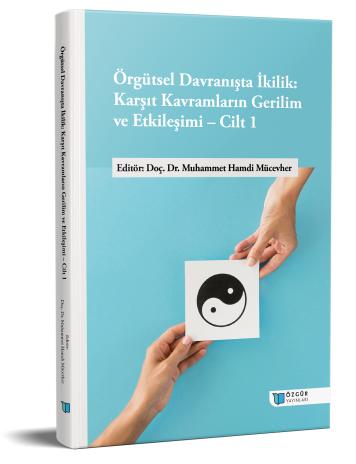
The Interaction Between Psychological Capital and Learned Helplessness: The Interaction of Opposite Poles
Chapter from the book:
Mücevher,
M.
H.
(ed.)
2026.
Dualism in Organizational Behavior: The Tension and Interaction of Opposing Concepts – Volume 1.
Synopsis
This study aims to comprehensively examine the concepts of Psychological Capital and Learned Helplessness—representing two antithetical emotional polarities of the "human" resource, which serves as the most fundamental strategic element of sustainable competitive advantage in contemporary management—within the interdisciplinary framework of psychology and organizational behavior. In the increasingly complex and volatile landscape of today’s corporate world, psychological capital, characterized by its four core synergistic dimensions—self-efficacy, optimism, hope, and resilience—functions as a vital positive resource that maximizes individual performance, fosters psychological flexibility, and enhances organizational commitment. Conversely, learned helplessness is identified as a detrimental state of behavioral passivity, cognitive distortion, and motivational deficit, characterized by a perceived lack of control resulting from persistent negative experiences within the workplace.
Based on a comprehensive and systematic literature review, this conceptual paper discusses these constructs from a theoretical perspective, explores their intricate associations with other critical organizational variables, and critically analyzes the dynamic interplay between the two through the lens of organizational behavior. The study provides a conceptual framework by synthesizing the roles of these two constructs within the organizational ecosystem in light of pioneering research. The findings ultimately conclude that possessing a robust level of psychological capital in both individual and organizational contexts serves as a strategic buffer in disrupting the vicious cycle of learned helplessness, thereby enabling employees to regain agency and proactive motivation.
How to cite this book
License

This work is licensed under a Creative Commons Attribution-NonCommercial 4.0 International License.
Published
DOI
Categories
Copyright (c) 2026 Muhammet Hamdi Mücevher; Betül Okudur Sabuncu- Muhammet Hamdi Mücevher- Fatma Nur Karaca- Hatice Çoban Kumbalı- Gamze Solmaz- Hacer Orun Kavak- İfakat Atak- İbrahim Salih Çekim- Fatmanur Çeçen- Zeynep İlhan- Şengül Sağlam- Şerife Güzel- Hatice Sabırlı- Mehmet Ali Taş- Damla Aylin Erten- Esin Barutçu- Derya Dinçer Gültekin- Zeynep Duran