
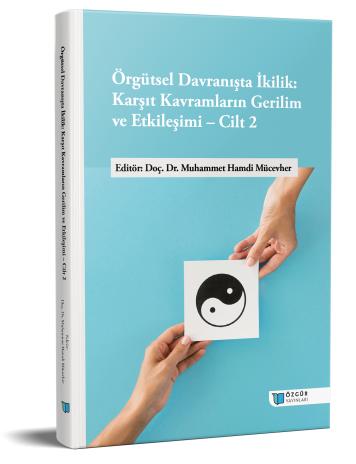
Between Self and We: The Interaction of Individualism and Collectivism
Chapter from the book:
Mücevher,
M.
H.
(ed.)
2026.
Dualism in Organizational Behavior: The Tension and Interaction of Opposing Concepts – Volume 2.
Synopsis
This chapter examines the concepts of individualism and collectivism within the framework of the modern subject positioned along the axis of “self” and “we.” Rather than treating these two concepts as rigid and opposing cultural categories, the study conceptualizes them as interwoven, context-dependent orientations that often complement one another within the processes of identity construction. The modern individual simultaneously seeks autonomy, freedom, and personal achievement, while also generating meaning through belonging, security, and social bonds. Individualism is analyzed in relation to autonomy, competition, and performance culture. Particular emphasis is placed on the role of individual achievement, personal responsibility, and performance-based evaluation systems within organizational structures. In such cultural settings, individuals tend to prioritize personal goals and are assessed primarily on the basis of measurable individual outputs. Collectivism, on the other hand, is addressed through themes of solidarity, normative commitment, prioritization of group interests, and social harmony. The individual is understood as embedded within networks of social relationships, where maintaining group cohesion and collective integrity becomes a central reference point. Moving beyond the individualism/collectivism dichotomy, the chapter argues that individuals may simultaneously display both orientations depending on situational and contextual conditions. Within the Turkish context, cultural hybridity is discussed through examples drawn from urban life, digital culture, and artistic production, demonstrating that culture is dynamic and continuously reconstructed. Finally, through the concepts of hybrid cultures and contextual individualism, the chapter proposes that culture should be understood not as fixed and homogeneous, but as negotiated, fluid, and plural.
How to cite this book
License

This work is licensed under a Creative Commons Attribution-NonCommercial 4.0 International License.
Published
DOI
Categories
Copyright (c) 2026 Muhammet Hamdi Mücevher; Nurdan Oral Kara- Semanur Çelik- Mehmet Beşir Demirbaş- Büşra Aydoğan- Gülçin Gökçenur Karataş- Hilal Erturhan Işkın- Dilan Türk- Murat Karaçetin- Ebru Armutcu- Beyzanur Üstünbaş- Aysel Tamtamış Kurt- Vacide Ancın- Kübra Ağırkaya Çetintürk- İskender Çetintürk- Zeynep Duran- Derya Dinçer Gültekin- Kevser Sezer Korucu