
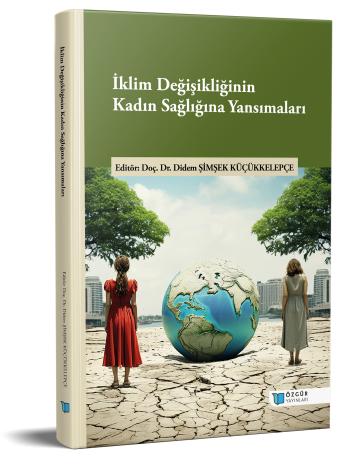
Climate Change and Gender Inequalities: Implications for Women's Health
Chapter from the book:
Şimşek Küçükkelepçe,
D.
(ed.)
2026.
Impacts of Climate Change on Women’s Health.
Synopsis
Climate change is not only an environmental crisis but also a multidimensional structural transformation that deepens existing social inequalities. When examined through the concepts of vulnerability, exposure, adaptive capacity, and resilience, its impacts are clearly unevenly distributed across populations. Gender-based inequalities, in particular, lead to women being disproportionately affected. In rural areas, women’s responsibilities in water collection, agricultural production, and unpaid care work make them directly vulnerable to natural resource depletion, resulting in time poverty, income loss, and reduced educational opportunities.
Climate change also poses significant risks to women’s health and reproductive health. Rising temperatures, air pollution, and food insecurity negatively affect fertility, pregnancy outcomes, and the menopausal transition. Exposure to extreme heat has been associated with preterm birth, low birth weight, and hypertensive disorders of pregnancy, while air pollution increases the risk of pregnancy loss and adverse neurodevelopmental outcomes. Disruptions in health services during climate-related disasters further elevate maternal and neonatal morbidity risks. From an economic perspective, climate change constrains women’s employment opportunities and increases informal and insecure forms of work. Therefore, gender-responsive climate policies and resilient health systems are essential. Strengthening women’s participation in decision-making processes, producing sex-disaggregated data, and restructuring reproductive health services within a climate resilience framework are fundamental requirements for achieving climate justice and sustainable development goals.
How to cite this book
License

This work is licensed under a Creative Commons Attribution-NonCommercial 4.0 International License.
Published
DOI
Categories
Copyright (c) 2026 Didem Şimşek Küçükkelepçe; Esra Sabancı Baransel- Elanur Ateş Kara- Elif Ayfer Baltacı Yıldız- Hilal Merve Belen- Meltem Meriç- Gülsüm Akkuş- Didem Şimşek Küçükkelepçe- Fatma Keskin Töre- Nurcan Gökgöz- Seda Hazar- Gülçin Nacar