
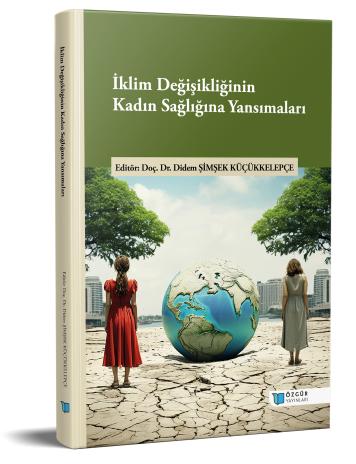
İklim Değişikliği Bağlamında Kadın Ruh Sağlığı: Toplumsal Cinsiyet ve Sosyal Belirleyiciler
Şu kitabın bölümü:
Şimşek Küçükkelepçe,
D.
(ed.)
2026.
İklim Değişikliğinin Kadın Sağlığına Yansımaları.
Özet
İklim değişikliği, 21. yüzyılın en büyük küresel krizlerinden biri olarak yalnızca çevre üzerinde değil, aynı zamanda insan sağlığı üzerinde de çok boyutlu ve sistemik etkiler oluşturmaktadır. İklim değişikliğinin fiziksel sağlık üzerindeki etkileri uzun süredir araştırılmakla birlikte, ruh sağlığı üzerindeki etkileri son yıllarda hızla gelişen bir bilimsel konu hâline gelmiştir. Dünya Sağlık Örgütü (WHO) iklim değişikliğini küresel halk sağlığı için en büyük tehditlerden biri olarak tanımlamakta ve bunun sonucunda ruh sağlığı sorunlarının kaçınılmaz olduğunu vurgulamaktadır. Son yıllarda yapılan araştırmalar, iklim değişikliğinin yol açtığı aşırı hava olaylarının, geçim kaynaklarının kaybına, zorunlu göçe ve geleceğe dair belirsizlik gibi stres durumları oluşturduğu ve bunun sonucunda; depresyon, anksiyete ve travma sonrası stres bozukluğu görülme insidansında artış olduğunu bildirmektedir.
Bilimsel kanıtlar, iklim değişikliğinin ruh sağlığı üzerindeki etkilerinin toplumsal cinsiyet açısından da eşit dağılmadığını göstermektedir. Kadınlar; yapısal toplumsal cinsiyet eşitsizlikleri, ekonomik kaynaklara erişim zorlukları, bakım yükünün orantısız dağılımı ve afet sonrası artış gösterebilen toplumsal cinsiyete dayalı şiddet riskleri nedeniyle iklim kaynaklı psikososyal stresörlere daha yüksek düzeyde maruz kalmaktadır. Dolayısıyla, iklim değişikliğinin ruh sağlığı üzerindeki etkilerini toplumsal cinsiyet perspektifiyle incelemek, hem epidemiyolojik farklılıkların hem de bu farklılıklar arkasındaki yapısal belirleyicilerin anlaşılması açısından kritik öneme sahiptir.
Anahtar Kelimeler:
Kaynakça Gösterimi
Lisans

Bu çalışma Creative Commons Attribution-NonCommercial 4.0 International License ile lisanslanmıştır.
Yayın Tarihi
DOI
Kategoriler
Telif Hakkı (c) 2026 Didem Şimşek Küçükkelepçe; Esra Sabancı Baransel- Elanur Ateş Kara- Elif Ayfer Baltacı Yıldız- Hilal Merve Belen- Meltem Meriç- Gülsüm Akkuş- Didem Şimşek Küçükkelepçe- Fatma Keskin Töre- Nurcan Gökgöz- Seda Hazar- Gülçin Nacar