
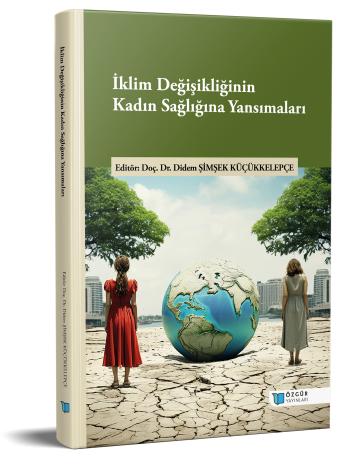
Pregnancy and Climate Change
Chapter from the book:
Şimşek Küçükkelepçe,
D.
(ed.)
2026.
Impacts of Climate Change on Women’s Health.
Synopsis
Climate change is recognized as one of the most significant public health threats of the twenty-first century, with impacts that are progressively deepening and projected to continue increasing on a global scale. Rising global temperatures, deterioration in air quality, increases in the frequency and severity of extreme weather events, and shifts in the ecology of infectious diseases generate multidimensional risks to human health. Pregnancy, characterized as a dynamic and sensitive period marked by extensive adaptations in the maternal cardiovascular, metabolic, endocrine, and immune systems, is associated with heightened susceptibility to environmental stressors. This distinctive physiological state renders pregnant individuals a vulnerable population to both the direct and indirect health effects of climate change. Current scientific evidence indicates that climate-related environmental exposures may be associated with adverse perinatal outcomes, including pregnancy loss, fetal growth restriction, low birth weight, preterm birth, and stillbirth. In this context, the adoption of climate-sensitive clinical approaches in maternal health services, the strengthening of risk-reduction strategies, and the development of preventive health policies are of critical importance.
How to cite this book
License

This work is licensed under a Creative Commons Attribution-NonCommercial 4.0 International License.
Published
DOI
Categories
Copyright (c) 2026 Didem Şimşek Küçükkelepçe; Esra Sabancı Baransel- Elanur Ateş Kara- Elif Ayfer Baltacı Yıldız- Hilal Merve Belen- Meltem Meriç- Gülsüm Akkuş- Didem Şimşek Küçükkelepçe- Fatma Keskin Töre- Nurcan Gökgöz- Seda Hazar- Gülçin Nacar