
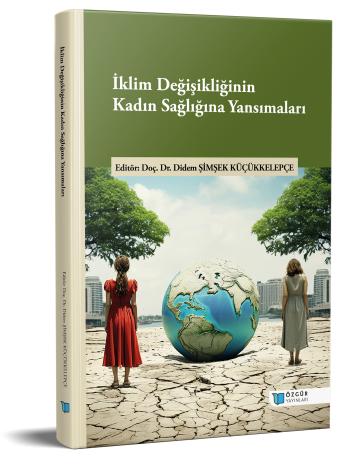
Climate Change and Gynecological Cancers
Chapter from the book:
Şimşek Küçükkelepçe,
D.
(ed.)
2026.
Impacts of Climate Change on Women’s Health.
Synopsis
Climate change is one of the most critical public health problems of our century. Air pollution, rising temperatures, water and food insecurity, and UV radiation are the main components of this threat. Women are disproportionately affected by these risks due to gender roles and socioeconomic inequalities. This structural vulnerability is thought to play a decisive role in the development of gynecological cancers. Environmental factors linked to climate change constitute a significant risk factor for ovarian, endometrial, cervical, vulvar, and vaginal cancers. Air pollution, extreme temperatures, exposure to contaminated water sources, and malnutrition can all contribute to the development of gynecological cancers through different biological pathways. Therefore, not only individual risk factors but also environmental and climatic conditions should be considered when evaluating gynecological cancers. In this regard, women's health nurses play important roles and have important responsibilities.
How to cite this book
License

This work is licensed under a Creative Commons Attribution-NonCommercial 4.0 International License.
Published
DOI
Categories
Copyright (c) 2026 Didem Şimşek Küçükkelepçe; Esra Sabancı Baransel- Elanur Ateş Kara- Elif Ayfer Baltacı Yıldız- Hilal Merve Belen- Meltem Meriç- Gülsüm Akkuş- Didem Şimşek Küçükkelepçe- Fatma Keskin Töre- Nurcan Gökgöz- Seda Hazar- Gülçin Nacar