
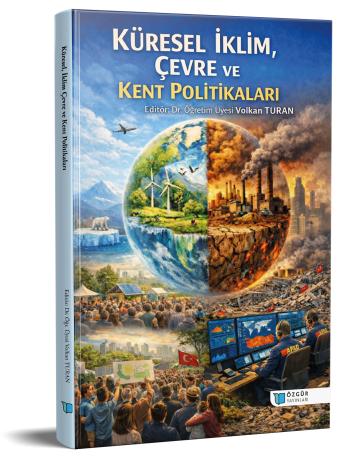
The Development of Disaster Management in Türkiye
Chapter from the book:
Turan,
V.
(ed.)
2026.
Global Climate, Environment and Urban Policies.
Synopsis
Disasters are multifaceted events that profoundly disrupt the social, economic, and physical order of societies. Therefore, disaster management should be considered not only as an immediate response but also as an integrated system encompassing pre-disaster preparedness, risk reduction efforts, and post-disaster recovery processes. This review examines the evolution of disaster management understanding in Turkey from a historical perspective. Changes in laws, institutions, and management strategies from the Ottoman period to the present day are discussed in chronological order. The 1999 Marmara Earthquake, in particular, marked a turning point for Turkey, bringing about a fundamental shift in disaster management approaches. This section analyzes the transition from the old "intervention-oriented" system, which focused solely on the crisis, to the modern "risk-based" management approach, which aims to identify and mitigate potential risks in advance. The study then emphasizes the vital importance of proactive disaster risk assessment and mitigation activities. The effectiveness of inter-institutional cooperation, central coordination, and the development of sustainable disaster policies within the current system are evaluated. This chapter aims to provide an objective overview of the current state of disaster management systems in Turkey and to offer solutions to improve their efficiency.
How to cite this book
License

This work is licensed under a Creative Commons Attribution-NonCommercial 4.0 International License.
Published
DOI
Categories
Copyright (c) 2026 Volkan Turan; Esra Keskin- Nisa Nur Külahçı Cebe- Emine Baydan- Ali Kiriktaş- Giray Butur- Murat Nazlı- Mine Kılınç- Cemal Özdemir- Nurettin Bilmez- Sultan Yıldırım Tutar- Ayşe Güneş Bayır