
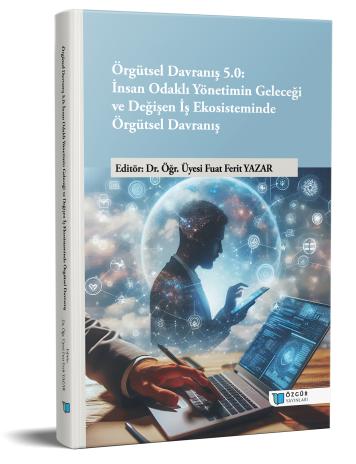
Re-thinking Organizational Behavior in the Digital Age: Remote Work and Digital Organizational Culture
Chapter from the book:
Yazar,
F.
F.
(ed.)
2026.
Organizational Behavior 5.0: The Future of Human-Centered Management and Organizational Behavior in a Changing Business Ecosystem.
Synopsis
Recent technological developments and the increasing importance of remote work as a new form of flexible working make it necessary to reconsider the concepts of organizational culture and organizational behavior. In particular, the integration of remote work into institutional structures as a new and widespread form of working has led to significant transformations in the ways organizations operate and in their cultural dynamics. Initially introduced with the aim of reducing costs and providing flexibility, remote work has today evolved into a strategic management model associated with multidimensional objectives such as increased productivity, work–life balance, employee job satisfaction, and sustainable performance.
This study argues that organizational behavior is not a phenomenon limited solely to the physical work environment; rather, it should be evaluated within a work ecosystem that has been redefined through digitalization. In this context, remote work is addressed as a multidimensional transformation field that influences many variables, ranging from leadership approaches and communication styles to performance evaluation processes, organizational commitment, and perceptions of psychological safety. Remote work is considered one of the most concrete reflections of human-centered digital transformation at the organizational level and points to a structural transformation that necessitates the reconceptualization of organizational behavior within the framework of digital organizational culture.
How to cite this book
License

This work is licensed under a Creative Commons Attribution-NonCommercial 4.0 International License.
Published
DOI
Categories
Copyright (c) 2026 Fuat Ferit Yazar; Oğuz Akar- Zümrüt Hatun Demirel- Aytül Güneşer Demirci- Burcu Şefika Doğrul- Güray Yılmaz- Şükrü Bozkurt- Özlem Munise Kaynak