
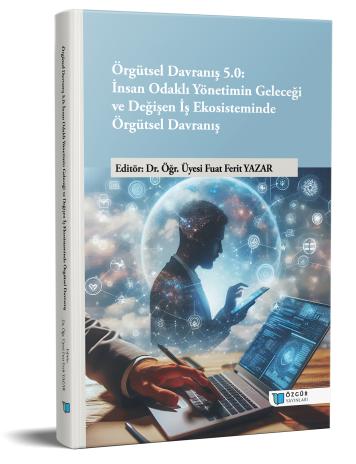
Human-Centered Management in Digital Organizations: From Information Overload to Analysis Paralysis
Chapter from the book:
Yazar,
F.
F.
(ed.)
2026.
Organizational Behavior 5.0: The Future of Human-Centered Management and Organizational Behavior in a Changing Business Ecosystem.
Synopsis
With the impact of digital transformation, data production and information flows within organizations have increased rapidly, bringing new cognitive and managerial challenges to decision-making processes. The growth in the volume of information creates an imbalance between employees’ cognitive capacity and the amount of information that must be processed, leading to the phenomenon of information overload. Information overload constitutes a significant organizational problem that strains employees’ attention, memory, and decision-making processes while increasing stress levels and negatively affecting job performance. One of the most notable consequences of this condition is the concept of analysis paralysis. Analysis paralysis emerges when decision makers struggle to make decisions or postpone the decision-making process due to excessive information and a large number of alternatives. This section discusses how a human-centered management perspective provides a critical framework for understanding the relationship between information overload and analysis paralysis in digital organizations. Human-centered management aims to manage the growing volume of information in the digitalization process more effectively by focusing on the cognitive capacity and psychological well-being of organizational members.
How to cite this book
License

This work is licensed under a Creative Commons Attribution-NonCommercial 4.0 International License.
Published
DOI
Categories
Copyright (c) 2026 Fuat Ferit Yazar; Oğuz Akar- Zümrüt Hatun Demirel- Aytül Güneşer Demirci- Burcu Şefika Doğrul- Güray Yılmaz- Şükrü Bozkurt- Özlem Munise Kaynak