
Digital Literacy and Its Organizational Implications
Chapter from the book:
Şener,
E.
(ed.)
2026.
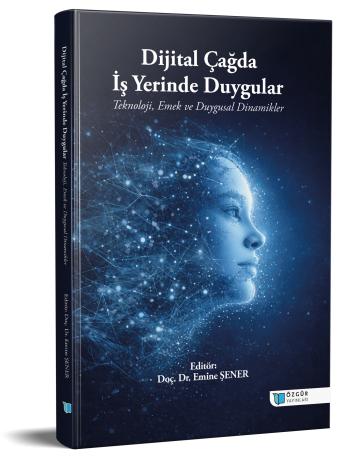
Emotions in the Workplace in the Digital Age: Technology, Labor, and Emotional Dynamics.
Synopsis
The rapid development of digital technologies and the widespread use of the internet have made the ability to operate effectively in digital environments an essential competence for individuals. In this context, digital literacy is no longer limited to the ability to use technological tools; rather, it encompasses a multidimensional set of competencies including accessing information, evaluating digital content, producing information, thinking critically, and engaging ethically and safely in digital environments. The aim of this chapter is to examine the concept of digital literacy in terms of its conceptual foundations, development process, and skill frameworks proposed in the literature, and to discuss its potential implications for organizational attitudes and behaviors. First, the theoretical development of digital literacy and the definitions proposed by various scholars are reviewed. Subsequently, the dimensions of digital literacy are explained through different models such as Ng’s digital literacy framework, the European Commission’s DigComp framework, and the DQ Institute model. These frameworks highlight that digital literacy is a multilayered competence consisting of technical, cognitive, and socio-emotional components. The chapter then discusses the organizational implications of digital literacy by examining its relationship with several organizational variables, including self-efficacy, technostress, positive psychological capital, cognitive learning, technology acceptance, and digital organizational citizenship behavior. It is suggested that digital literacy can facilitate employees’ adaptation to digital systems, strengthen their perceptions of technology use, and support their psychological resources. Furthermore, digital literacy may contribute to collaboration, learning processes, and responsible digital behavior within organizations. Therefore, digital literacy should be considered not only as an individual competence but also as a strategic capability that may influence organizational processes and employee behaviors.
How to cite this book
License

This work is licensed under a Creative Commons Attribution-NonCommercial 4.0 International License.
Published
DOI
Categories
Copyright (c) 2026 Emine Şener; Gökhan Kenek- Rabia Sultan Kurşuncu- Gamze Özcan- Ergün Kara- Ethem Merdan- Fatih Ferhat Çetinkaya- Mehmet Orkun Ünsever- Mustafa İsmet Başboğa- Tugay Öney- Abdullah Turan