
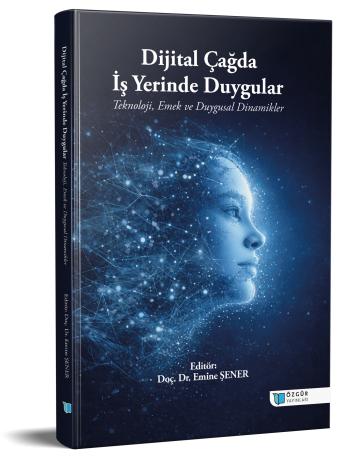
Emotional Governance of the State in the Digital Age: The Transformation of Political Processes with Artificial Intelligence
Chapter from the book:
Şener,
E.
(ed.)
2026.
Emotions in the Workplace in the Digital Age: Technology, Labor, and Emotional Dynamics.
Synopsis
In the digital age, the political sphere is no longer a public deliberation space where emotions emerge spontaneously; it has transformed into a governance domain where emotions are measured, classified, and directed algorithmically. This study examines how artificial intelligence (AI) transforms its capacity to influence and guide emotions into a tool of political power, and how this transformation necessitates a reevaluation of democratic competition and the role of the state. In the digital era, AI goes beyond analyzing voter behavior, generating personalized political messages, and optimizing campaign strategies. It has become a technology with a high capacity for emotional guidance within political communication and public administration processes. While this development increases data-driven efficiency in political decision-making, it simultaneously generates risks for democratic equality and political fairness through manipulation, speculative content production, and asymmetrical competitive advantages. The study is based on a qualitative research methodology, combining a literature review with case study analyses of contemporary political practices. The findings indicate that AI-based emotional guidance mechanisms enhance the persuasive power of political communication. However, they also reshape the structure of democratic competition, exacerbating issues of accountability, transparency, and ethical responsibility. Consequently, AI should be regarded in the political realm not only as a strategic tool but also as a governance domain that requires regulation, oversight, and inclusion within public policy frameworks.
How to cite this book
License

This work is licensed under a Creative Commons Attribution-NonCommercial 4.0 International License.
Published
DOI
Categories
Copyright (c) 2026 Emine Şener; Gökhan Kenek- Rabia Sultan Kurşuncu- Gamze Özcan- Ergün Kara- Ethem Merdan- Fatih Ferhat Çetinkaya- Mehmet Orkun Ünsever- Mustafa İsmet Başboğa- Tugay Öney- Abdullah Turan