
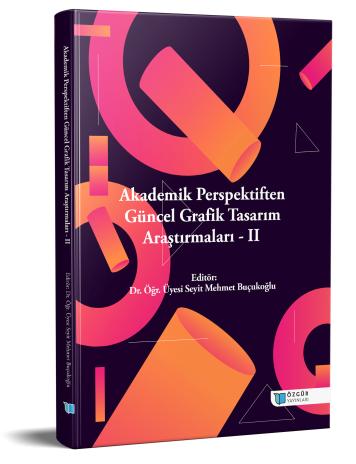
Research Methods in Graphic Design: Data Collection Techniques
Chapter from the book:
Buçukoğlu,
S.
M.
(ed.)
2026.
Current Research in Graphic Design from an Academic Perspective - II .
Synopsis
Graphic design is an interdisciplinary field that goes beyond aesthetic arrangements and is based on problem solving, communication, and understanding user needs. For this reason, research plays a crucial role in the graphic design process, particularly in accurately defining design problems and developing effective solutions. This chapter examines data collection methods used in graphic design research and discusses how research can be planned and implemented within the design process.
The research process begins with defining the design problem and gaining a general understanding of the subject. At this stage, preparing a design brief, generating keywords, and conducting visual research are important steps that guide the design process. In design research, data collection methods are generally examined under two main categories: primary and secondary research. Primary research involves collecting direct data through methods such as observation, interviews, and surveys in order to understand users, target audiences, the market, and the context in which the design will be used.
Secondary research, on the other hand, involves reviewing and analyzing existing information such as previous studies, reports, and academic publications. This approach helps designers understand the social, cultural, and economic context in which a design exists while also providing a theoretical foundation for the research process. As a result, using different data collection methods together in graphic design research enables designers to develop user-centered and knowledge-based design solutions.
How to cite this book
License

This work is licensed under a Creative Commons Attribution-NonCommercial 4.0 International License.
Published
DOI
Categories
Copyright (c) 2026 Seyit Mehmet Buçukoğlu; Merve Yıldırım- Öznur Işır- Bayram Bozhüyük- Seyit Mehmet Buçukoğlu- Ayşen Balcı Çınar