
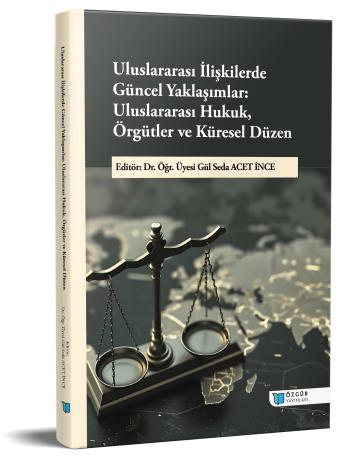
Regional Organizations and New Approaches Emerging in Latin America After 2000
Chapter from the book:
Acet İnce,
G.
S.
(ed.)
2026.
Current Approaches in International Relations: International Law, Organizations, and the Global Order.
Synopsis
Latin America has been a region undergoing political and social changes since the 2000s. These changes have also led to changes in organizational structures. Organizations that emerged after 2000 have become different from those established in the region before them in terms of their structures and scope. Each has different goals and scopes within itself. In addition, they are similar in terms of the integration of countries in the region based on Simon Bolivar, their joint decision-making processes, and their capacity to pursue policies different from those of the United States. The study examines the ALBA, UNASUR, CELAC, and Pacific Alliance organizations and attempts to understand the unique value of each.
The main reason for examining organizations established in the region after 2000 is the emergence of new political and social structures during this period, linked to changing governments. Although each is politically distinct, they share a similar goal of enhancing their capacity to act independently of regional integration and US leadership. The organizations examined are significant both regionally and as potential models for other regions.
How to cite this book
License

This work is licensed under a Creative Commons Attribution-NonCommercial 4.0 International License.
Published
DOI
Categories
Copyright (c) 2026 Gül Seda Acet İnce; Ahmet Üçağaç- Figen Aydın- Ayşe Gökçe Arslan- Burcu Gökatalay- Meliha Elif Güven- Hande Sapmaz- Zuhal Çalık Topuz- Canan Kışlalıoğlu- Sıddık Arslan- Burak Kurtcebe