
Between Recognition and Transformation: Nation-Making in the Early Turkish Republic
Chapter from the book:
Özden,
Y.
(ed.)
2026.
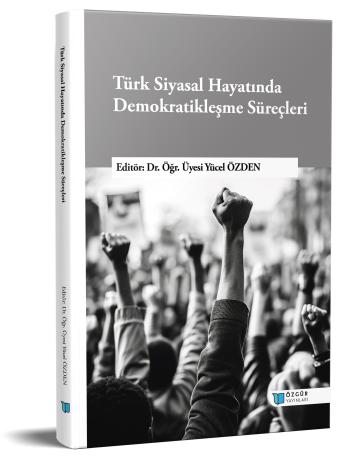
Democratization Processes in Turkish Political Life.
Synopsis
This study aims to examine the nation-making process in the early Turkish Republic through the tension between “recognition” and “transformation.” Focusing on the cases of the Turkish Hearths, People’s Schools, People’s Houses, and Village Institutes, it argues that nation formation was not merely an ideological project of identity construction, but also operated as an attempt by the state to define, classify, and reshape its own society. Emerging during the dissolution of the Ottoman Empire, Turkist thought acquired an institutional and systematic character in the Republican period, as conceptions of national identity were carried into the social realm through educational and cultural policies. While the Turkish Hearths formulated the cultural framework of national identity, the People’s Schools disseminated this framework on a mass scale through linguistic standardization. The People’s Houses functioned as mechanisms of recognition, recording and reorganizing folk culture according to normative criteria, whereas the Village Institutes extended this intervention into the everyday and material life of the countryside through a production-oriented model of education. Nation-making thus appears as a multilayered process extending from ideological discourse to cultural practices and the organization of social life. By reading these late Ottoman and early Republican policies as a series of institutionalized encounters between state and society, the study highlights the knowledge-producing and socially regulatory dimensions of nation formation. In doing so, it seeks to contribute to debates on nationalism by demonstrating that educational and cultural institutions functioned not only as instruments of identity formation, but also as mechanisms through which the state came to know and reorganize its own society.
Keywords:
How to cite this book
License

This work is licensed under a Creative Commons Attribution-NonCommercial 4.0 International License.
Published
DOI
Categories
Copyright (c) 2026 Yücel Özden; Erdoğan Altun- Tülay Gül Polat- Umut Turgut Yıldırım- Mücahit İsmail Coşkun- Göktuğ Şeker