
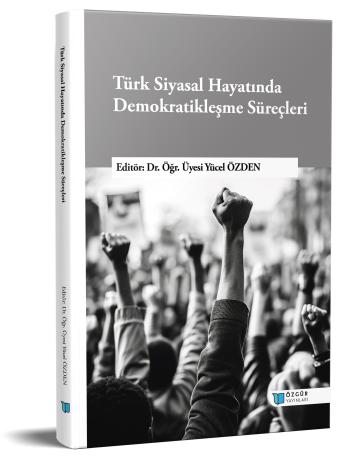
Election Systems in Türkiye
Chapter from the book:
Özden,
Y.
(ed.)
2026.
Democratization Processes in Turkish Political Life.
Synopsis
This study examines the conceptual structure of electoral systems, one of the key actors in democracy, and their historical journey in Turkey. The main objective of the study is to examine the structural relationship between the principles of “fair representation” and “stability in governance,” which are inherent in electoral systems and drive lawmakers to seek balance. The study explains the theoretical foundations of majority, proportional representation, and mixed electoral systems. Furthermore, the study evaluates the impact of technical elements such as the size of electoral districts, electoral thresholds, and ballot papers as tools of constitutional engineering on politics. Historically, it examines the first experiences of Muhassıllık and Meşrutiyet in the Ottoman Empire, followed by the single-party process, the transition to a multi-party system in 1946, and the list-based majority system implemented thereafter. Subsequently, the proportional representation methods adopted with the 1961 Constitution and the representation-stability outcomes created by the high-threshold d'Hondt system that came into force after the 1982 Constitution are discussed chronologically. Furthermore, the study examines the effects of recent developments on the system, such as the legalization of electoral alliances with the transition to the Presidential Government System and the reduction of the national threshold to 7% with the 2022 revision. In conclusion, the study states that high thresholds in legislative elections should be lowered because stability has been achieved through the direct election of the executive branch by the people under the new constitutional order, and emphasizes the need for a pluralistic electoral system reform in the Grand National Assembly of Turkey to ensure social diversity and fair representation.
Keywords:
How to cite this book
License

This work is licensed under a Creative Commons Attribution-NonCommercial 4.0 International License.
Published
DOI
Categories
Copyright (c) 2026 Yücel Özden; Erdoğan Altun- Tülay Gül Polat- Umut Turgut Yıldırım- Mücahit İsmail Coşkun- Göktuğ Şeker