
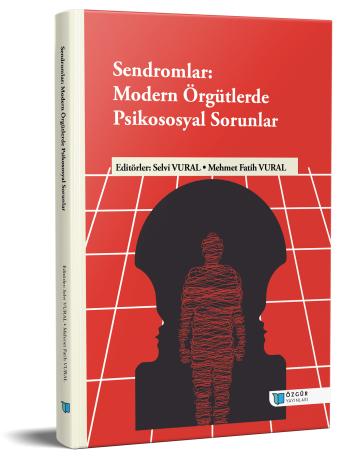
Syndromes: Psychosocial Problems in Modern Organizations
Synopsis
Contemporary working life is situated at the center of a transformation that is faster and more profound than at any other point in history. In an era where globalization dissolves geographical boundaries, digitalization fundamentally reshapes ways of working, competition intensifies, and time becomes one of the most valuable resources, organizations are compelled to produce more, move faster, and operate more efficiently in order to sustain their existence. Yet, amid this relentless race, one essential reality is often overlooked or rendered invisible: the human being, who is the very subject of work.
Organizations are not merely structures designed for production and service delivery; they are also complex social environments that deeply influence the psychological and social well-being of employees. The increasing performance expectations, demands for flexibility, and conditions of constant accessibility within modern management practices place considerable physical, emotional, and cognitive strain on employees. Such strain sometimes emerges as clearly identifiable problems, yet at other times it manifests in subtle, insidious forms—unspoken and often unnamed disturbances that gradually affect individuals and organizational climates alike. At this point, the concept of “syndromes,” which has increasingly attracted attention within the field of organizational behavior, offers an important explanatory framework. Organizational syndromes can be described as psychosocial phenomena that quietly circulate within the atmosphere of organizations, sometimes affecting individuals, sometimes teams, and sometimes the entire organizational system. The silent cry of burnout, the destructive competition of the crab bucket syndrome, the profound stillness of organizational silence, the corrosive nature of envy, the intoxicating arrogance of hubris syndrome, the emotional exhaustion associated with compassion fatigue, the decline in quality caused by the hurry-up syndrome, and the invisible sacrifices reflected in citizenship syndrome—all represent hidden dynamics that threaten employees’ well-being, motivation, commitment, and ultimately the sustainable success of organizations.
The book titled “Syndromes: Psychosocial Problems in Modern Organizations” has been prepared with the ambition of making these invisible dynamics visible. Positioned at the intersection of organizational behavior, human resource management, and work psychology, this volume aims to examine psychosocial syndromes from a multidimensional perspective. Within the scope of the book, commonly encountered syndromes in contemporary organizations are analyzed alongside their theoretical foundations, while their causes, developmental processes, and individual as well as organizational consequences are discussed in depth in light of the academic literature. One of the distinctive contributions of this book is its approach to syndromes not merely as individual pathologies but as systemic phenomena closely related to organizational structures, cultures, and managerial practices. While syndromes may partly reflect personal vulnerabilities, they are often shaped by organizational conditions, leadership styles, and job design. In this regard, the book seeks to provide a holistic perspective by addressing both micro-level individual experiences and macro-level organizational dynamics. The target audience of this book is broad. For academics and graduate students, it offers a contemporary resource within the field of organizational behavior. At the same time, it aims to serve as a practical guide for managers, human resource professionals, organizational consultants, and practitioners working in the field of organizational psychology. By maintaining theoretical depth while also presenting practical implications, the book aspires to contribute to the development of healthier, more supportive, and more sustainable organizational environments.
I would like to express my sincere gratitude to all chapter authors who contributed to this work. Through their expertise and dedication, each author has carefully crafted a piece of the broader mosaic of psychosocial syndromes within organizations. I would also like to thank the publishing team for their support throughout the publication process, as well as our families who have always stood by us with patience and encouragement. Our greatest hope is that “Syndromes: Psychosocial Problems in Modern Organizations” will offer readers new perspectives, increase awareness of the human dimension of organizations, and contribute—however modestly—to the creation of more humane and healthier workplaces. After all, healthy organizations can only exist through the presence of healthy individuals, and every syndrome is, in essence, a signal that something within the system is not functioning as it should. Listening to these signals, understanding them, and responding with appropriate interventions is a responsibility shared by all of us.
We wish you an engaging reading experience and inspiring discoveries.
The Editor
Chapters
How to cite this book
License

This work is licensed under a Creative Commons Attribution-NonCommercial 4.0 International License.
Published
ISBN
DOI
Statistics
Categories
Copyright (c) 2026 Selvi Vural- Mehmet Fatih Vural; Nejla Aydınoğlu- Selvi Vural- Ömer Özişli- Ümit Yaşar Sönmez- Seval Aksoy Kürü- Leyla İçerli- Dilek Akay- Sadiye Oya Işıkcı