
Citizenship Fatigue
Chapter from the book:
Vural,
S.
&
Vural,
M.
F.
(eds.)
2026.
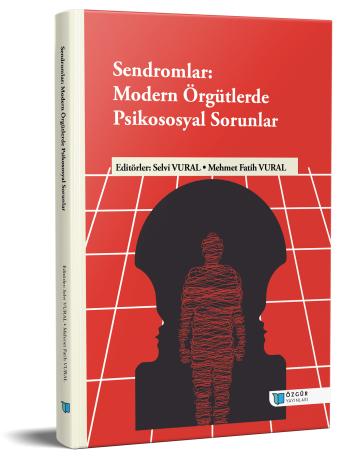
Syndromes: Psychosocial Problems in Modern Organizations.
Synopsis
Organizational citizenship behaviors have long been conceptualized as voluntary, prosocial contributions that enhance organizational effectiveness. However, a growing body of empirical evidence suggests that these behaviors are not always cost-free and may entail significant psychosocial burdens for employees under certain conditions. This book chapter examines the concept of citizenship fatigue, which emerges when organizational citizenship behaviors become persistent, normatively expected, and perceived as insufficiently reciprocated. The chapter first provides a conceptual definition of citizenship fatigue and clarifies its distinction from traditional burnout perspectives. It then integrates key theoretical frameworks—including conservation of resources theory, social exchange theory, role theory, and moral disengagement approaches—to explain the emergence and dynamics of citizenship fatigue within contemporary organizations. Building on this integrative framework, the chapter systematically discusses the individual (e.g., psychological strain, withdrawal), organizational (e.g., silence, knowledge hiding, diminished sustainability of performance), and ethical (e.g., moral rationalization, erosion of normative boundaries) consequences associated with citizenship fatigue. In addition, the chapter highlights the importance of recent scale adaptation and validation efforts that enable citizenship fatigue to be examined as a measurable and empirically traceable construct across different organizational contexts. By rendering an often “invisible” psychosocial burden visible and analyzable, these measurement efforts provide a foundation for future longitudinal, multilevel, and cross-cultural research. Overall, this chapter positions citizenship fatigue not merely as an individual well-being issue, but as a critical phenomenon with far-reaching implications for organizational functioning and ethical sustainability. By synthesizing theoretical insights and empirical evidence, it offers a comprehensive framework for scholars and practitioners seeking to better understand the unintended costs of sustained prosocial behavior in modern organizations.
How to cite this book
License

This work is licensed under a Creative Commons Attribution-NonCommercial 4.0 International License.
Published
DOI
Categories
Copyright (c) 2026 Selvi Vural- Mehmet Fatih Vural; Nejla Aydınoğlu- Selvi Vural- Ömer Özişli- Ümit Yaşar Sönmez- Seval Aksoy Kürü- Leyla İçerli- Dilek Akay- Sadiye Oya Işıkcı