
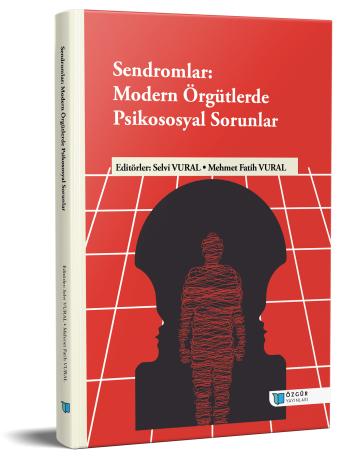
Common Modern Workplace Syndromes and Psychosocial Risks in Airline Organizations
Chapter from the book:
Vural,
S.
&
Vural,
M.
F.
(eds.)
2026.
Syndromes: Psychosocial Problems in Modern Organizations.
Synopsis
The contemporary civil aviation sector operates as one of the most complex socio-technical systems of the modern world, where the margin for error is extremely low and the consequences of failure can be catastrophic. Within this context, both cockpit and cabin crew members are exposed to a range of psychosocial risks arising from the unique structural and operational demands of the air transport industry, which shape their well-being, performance, and efficiency. This section identifies common psychosocial risks and syndromes encountered by flight crew members in modern airline organizations, examining the causes, symptoms, and prevalence of each syndrome within contemporary organizational settings. In this regard, it analytically addresses prevalent workplace syndromes affecting flight crews, including jet lag and chronic fatigue, emotional labor, burnout, organizational silence, task overload fatigue, and work-life imbalance. Drawing upon established organizational psychology theories as well as aviation-specific research and regulatory documents, each phenomenon is examined within the unique socio-technical environment of civil aviation. The section provides a comprehensive assessment in both academic and industry contexts. Overall, it demonstrates that psychosocial risks in the civil aviation sector constitute not only individual health concerns or personal vulnerabilities but also strategic issues affecting safety, performance, and organizational sustainability. The necessity of holistic and preventive approaches that place the human factor at the center is emphasized. Psychological risks continue to pose a significant threat for both employees and organizations in the sector, directly impacting not only individual well-being but also flight safety, service quality, and organizational efficiency. Accordingly, it is critical for airlines to systematically assess and manage their employees’ psychosocial risks and to enhance policies that address these risk factors.
How to cite this book
License

This work is licensed under a Creative Commons Attribution-NonCommercial 4.0 International License.
Published
DOI
Categories
Copyright (c) 2026 Selvi Vural- Mehmet Fatih Vural; Nejla Aydınoğlu- Selvi Vural- Ömer Özişli- Ümit Yaşar Sönmez- Seval Aksoy Kürü- Leyla İçerli- Dilek Akay- Sadiye Oya Işıkcı