
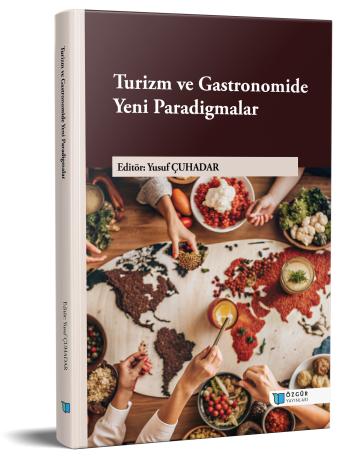
The Socio-Economic Role of Gastronomy in the Context of Rural Tourism
Chapter from the book:
Çuhadar,
Y.
(ed.)
2026.
New Paradigms in Tourism and Gastronomy.
Synopsis
Rural areas face significant challenges in terms of sustainable development due to economic fragility, limited employment opportunities, and outmigration. In this context, rural tourism has emerged as an important tool for rural development, as it is based on regional resources and encourages the direct involvement of local communities in the development process. Gastronomy, as one of the key components of rural tourism, has largely been addressed in the literature within the framework of tourist experience and destination attractiveness, while its socio-economic impacts on local development have received relatively limited attention. However, local foods should not be viewed merely as elements of touristic consumption; rather, they can be considered strategic development tools that support local production, enhance the economic participation of women, promote small-scale entrepreneurship, and ensure that value added remains within the local economy. The aim of this chapter is to examine the relationship between rural tourism and gastronomy from a local development perspective and to present, within a conceptual framework, the socio-economic role that gastronomy plays in rural areas. Accordingly, this study offers a holistic review of the relevant literature, discussing the key mechanisms through which gastronomy contributes to rural development and presenting implications for practice and policy.
How to cite this book
License

This work is licensed under a Creative Commons Attribution-NonCommercial 4.0 International License.
Published
DOI
Categories
Copyright (c) 2026 Yusuf Çuhadar; Furkan Dursun- Anıl Örnek- Çiğdem Kasalak- Utku Ongun- Pelin Candar- Özel Kılıç- Büşra Şen Avcu- İlhan Avcu- Hüseyin Ertan İnan- Bilal Karasakal- Arif Erdinç Emrem