
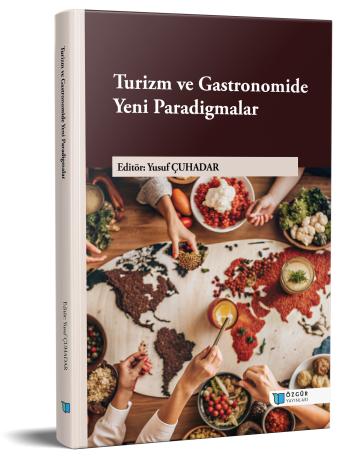
An Alternative Approach to Overtourism in the Context of Sustainab-le Tourism: Home Exchange
Chapter from the book:
Çuhadar,
Y.
(ed.)
2026.
New Paradigms in Tourism and Gastronomy.
Synopsis
This study examines whether the home exchange model can serve as an alternative solution to overtourism within the framework of sustainable tourism. The rapid growth of global tourism has generated multidimensional challenges in popular destinations, including environmental degradation, declining quality of life for residents, cultural commodification, and economic imbalances. Overtourism, associated with exceeding a destination’s carrying capacity, contradicts the core principles of sustainable tourism. In this context, sharing economy practices have emerged as potential alternative tourism models.
Unlike commercialized short-term rental platforms, the home exchange model is based on reciprocity, trust, and non-profit principles. The study highlights the environmental advantages of home exchange, such as reducing the need for new accommodation construction, lowering energy consumption compared to large-scale hotels, and enabling spatial redistribution of tourist flows. From a socio-cultural perspective, it promotes direct interaction between visitors and residents, fostering authentic experiences and intercultural exchange. Economically, it may contribute to a more balanced distribution of tourism benefits by redirecting expenditures toward local businesses rather than large corporations.
The study also discusses overtourism challenges in Turkish destinations such as Bodrum and Çeşme, proposing digitally supported home exchange systems—particularly among public sector employees—as a feasible alternative. The findings suggest that home exchange aligns with the environmental, social, and economic dimensions of sustainable tourism. However, broader policy support and empirical research are needed to enhance its effectiveness as a strategic tool against overtourism.
How to cite this book
License

This work is licensed under a Creative Commons Attribution-NonCommercial 4.0 International License.
Published
DOI
Categories
Copyright (c) 2026 Yusuf Çuhadar; Furkan Dursun- Anıl Örnek- Çiğdem Kasalak- Utku Ongun- Pelin Candar- Özel Kılıç- Büşra Şen Avcu- İlhan Avcu- Hüseyin Ertan İnan- Bilal Karasakal- Arif Erdinç Emrem