
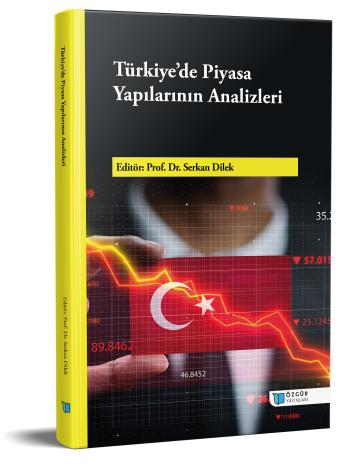
The Analyses of Market Structures in Türkiye
Synopsis
Technological changes lead to significant shifts in market structures. These market structures, in turn, influence firm behaviors as well as the performance of both firms and markets. Today, the fact that technological changes occur more rapidly than in any other period in history makes the interaction between market structure, firm behavior, and firm/market performance even more compelling. The book titled 'Analyses of Market Structures in Türkiye' features articles by various authors containing analyses of markets in Türkiye. Thus, it aims to contribute to the literature in the fields of microeconomics and industrial economics. Naturally, collaboration among different fields within the social sciences has evolved today; therefore, there is a close interaction with other areas (marketing, environmental economics, development economics, etc.) alongside microeconomics and industrial economics. In the chapter titled 'Competitive Strategies in Competitive Markets and the Importance of Positioning' written by Prof. Dr. Ahmet Gürbüz, the focus is on firm strategies in competitive markets and the significance of positioning as introduced to the literature by Porter. The chapter titled 'Regulation and the Effects of Regulations in the Insurance Sector' by Dr. Şerafettin Yayla examines the regulations implemented in the Turkish insurance sector. In the section titled 'The Status and Economic Viability of Public Goods in Türkiye: An Analysis of the Post-2000 Transformation from a Public Economics Perspective' by Assoc. Prof. Dr. İbrahim Külünk, the transformation in the production and financing structure of public goods in Türkiye after 2000 is discussed. The chapter 'Economic Analysis of Climate Change within the Framework of Negative Externalities: The Case of Türkiye' by Asst. Prof. Dr. Yasemin Aysu Köksal analyzes climate change through the concept of negative externalities. In the book chapter titled 'The Role of Social Media in Social Capital Production and Market Dynamics: A Qualitative Reality Inquiry into Optimistic Assumptions in the Context of Network Externalities' by Prof. Dr. Harun Yakışık, the role of social media in the formation of social capital and network economies is addressed. Finally, in the chapter titled 'Cultural Foundations of Digital Antisocial Behaviors: A Multilevel Analysis within the Framework of Social Benefit and Cost-Oriented Preference Functions' by Dr. Ömür Saltık and Dr. Filiz Bozağaç, a policy architecture is proposed to repair the benefit-cost balance of perpetrators in favor of collective welfare, rather than solely relying on prohibitive measures to combat digital aggression. This work aims to contribute to the literature by filtering the micro-dynamics of market structures in Türkiye through an interdisciplinary lens. I hope that the analyses in this book will both aid in understanding the theoretical framework and provide a foundation for future academic studies
Chapters
How to cite this book
License

This work is licensed under a Creative Commons Attribution-NonCommercial 4.0 International License.
Published
ISBN
DOI
Statistics
Categories
Copyright (c) 2026 Serkan Dilek; Ahmet Gürbüz- Şerafettin Okan Yayla- İbrahim Külünk- Yasemin Aysu Köksal- Harun Yakışık- Ömür Saltık- Filiz Bozağaç